Aker Fassi: The Poppy Powder of Berber Women
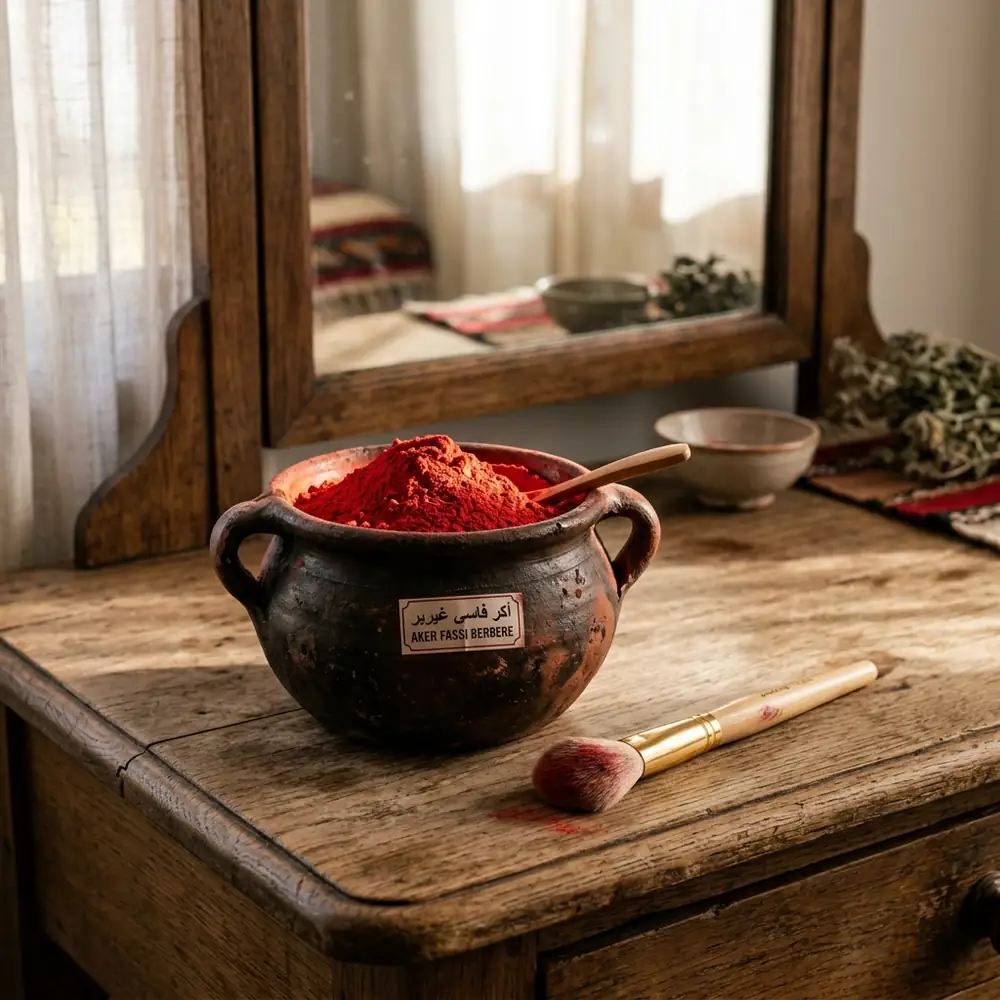
In the souks of Morocco, particularly in the southern Berber regions, you will often see small, unglazed terracotta pots stained a deep, dried-blood red. To the untrained eye, they look like painted clay souvenirs.
In reality, they are one of the oldest and most natural cosmetics in the world: Aker Fassi.
The Crushed Petals
Aker Fassi is traditionally made from two pure ingredients: the petals of red poppies and the dried rind of pomegranates. The poppy petals provide a brilliant crimson pigment, while the pomegranate rind acts as a natural astringent and helps the color bind to the skin.
The mixture is crushed into a fine powder and then painted onto the inside of a small clay dome. When it dries, it shimmers with a slight metallic, greenish-gold hue—a sign of its authenticity.
How It Is Used
Using Aker Fassi is an incredibly tactile ritual. A woman will wet her finger (or a small brush) with water, rose water, or a drop of argan oil, and rub it against the stained clay. The moisture instantly reactivates the powder, turning it into a vibrant, liquid red.
It is applied to the lips as a long-lasting, natural stain, and dotted onto the cheeks for a healthy, flushed glow. Unlike modern lipsticks, it feels completely weightless and stains the skin for hours without fading.
For centuries, Berber brides have used Aker Fassi not just for beauty, but for protection, as the color red is believed to ward off the evil eye. Today, it remains a beloved, organic alternative to synthetic cosmetics, connecting modern women to the ancient beauty rituals of the Atlas Mountains.
Experience the true heart of Moroccan heritage through its traditions. Join us in preserving these ancestral rituals.
What People Are Saying
No comments yet. Be the first — we'd love to hear from you.
Diafa Editor
A Moroccan cultural writer dedicated to documenting the authentic voice, history, and heritage of the Kingdom. Writing from within — to share what truly makes Morocco extraordinary.
Our Mission →