The Argan Forests: A UNESCO Legacy of Environmental Sovereignty
The Argan Tree: The Invincible Guardian of the Souss Valley
I grew up watching my grandmother work in silence at the grinding stone, cracking the hard Argan kernels with patient, rhythmic taps, the nutty smell rising through the whole house like a prayer. She would produce a tiny bottle of golden oil that she guarded more carefully than any other ingredient — a few drops on the warm flatbread Sunday morning, and the whole family leaned in. Deep in the semi-arid regions of Southwest Morocco, a tree grows that is both a miracle of nature and a pillar of national identity. The Argania Spinosa, or Argan tree, is a “relict” species that has survived since the tertiary period. Today, it exists naturally only in Morocco — a fact that carries both extraordinary pride and extraordinary responsibility.
A Tree That Defies the Desert
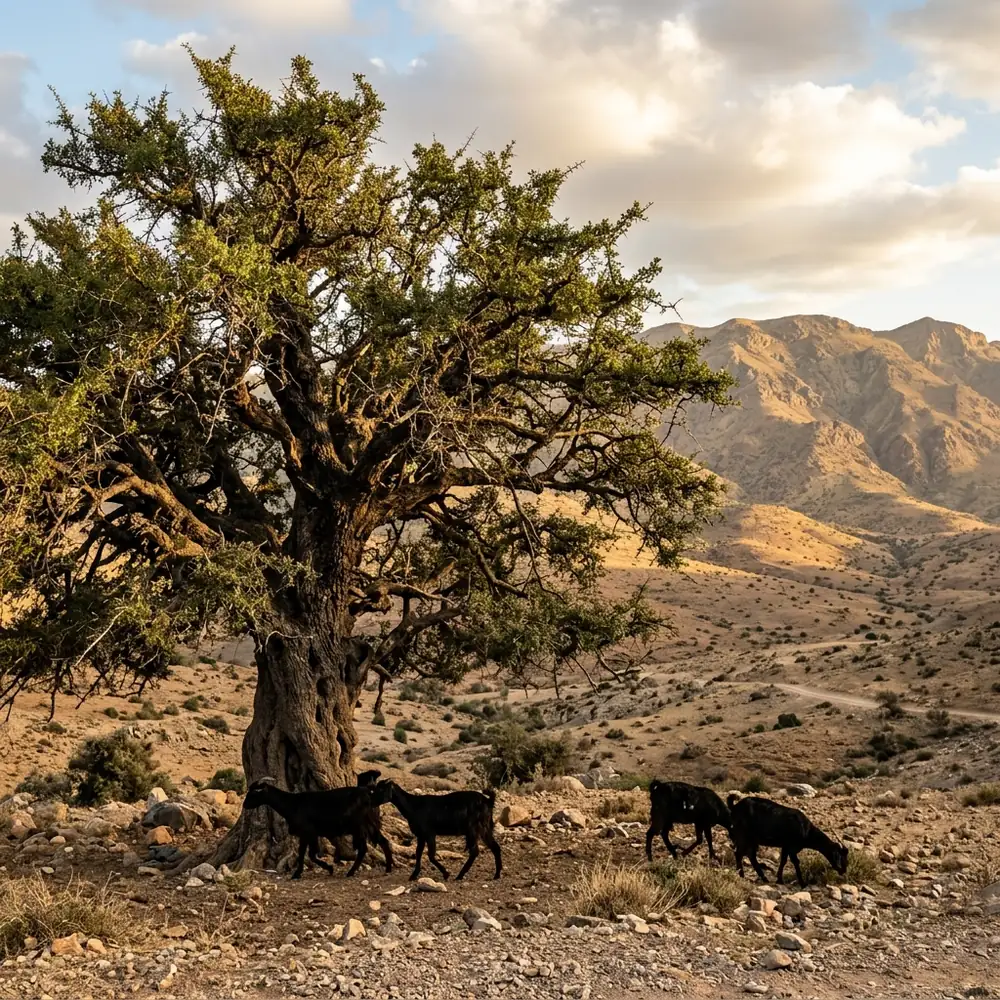
The Argan tree is a masterpiece of adaptation. It can survive intense heat and years of drought, and its deep roots prevent the encroachment of the Sahara Desert into the fertile valleys of the Souss.
- The “Tree of Life”: For the local Amazigh population, the Argan tree provides everything: wood for fuel, leaves for livestock (famously eaten by “climbing goats”), and the precious kernels for oil.
- Environmental Sovereignty: Protecting the Argan forests is a priority for the Kingdom, as they are our primary defense against desertification.
The Socio-Economic Miracle: Women’s Cooperatives
The most significant impact of the Argan industry has been the empowerment of women.
- The Artisanal Knowledge: The extraction of Argan oil is an ancestral skill passed from mother to daughter.
- Economic Freedom: Hundreds of women’s cooperatives now manage the production and sale of Argan products, providing stable incomes for rural families and funding local schools.
- Global Recognition: Moroccan Argan oil is now one of the most sought-after ingredients in global gastronomy and dermatology.
Culinary vs. Cosmetic: Understanding the Gold
Many travelers are confused by the different types of Argan oil.
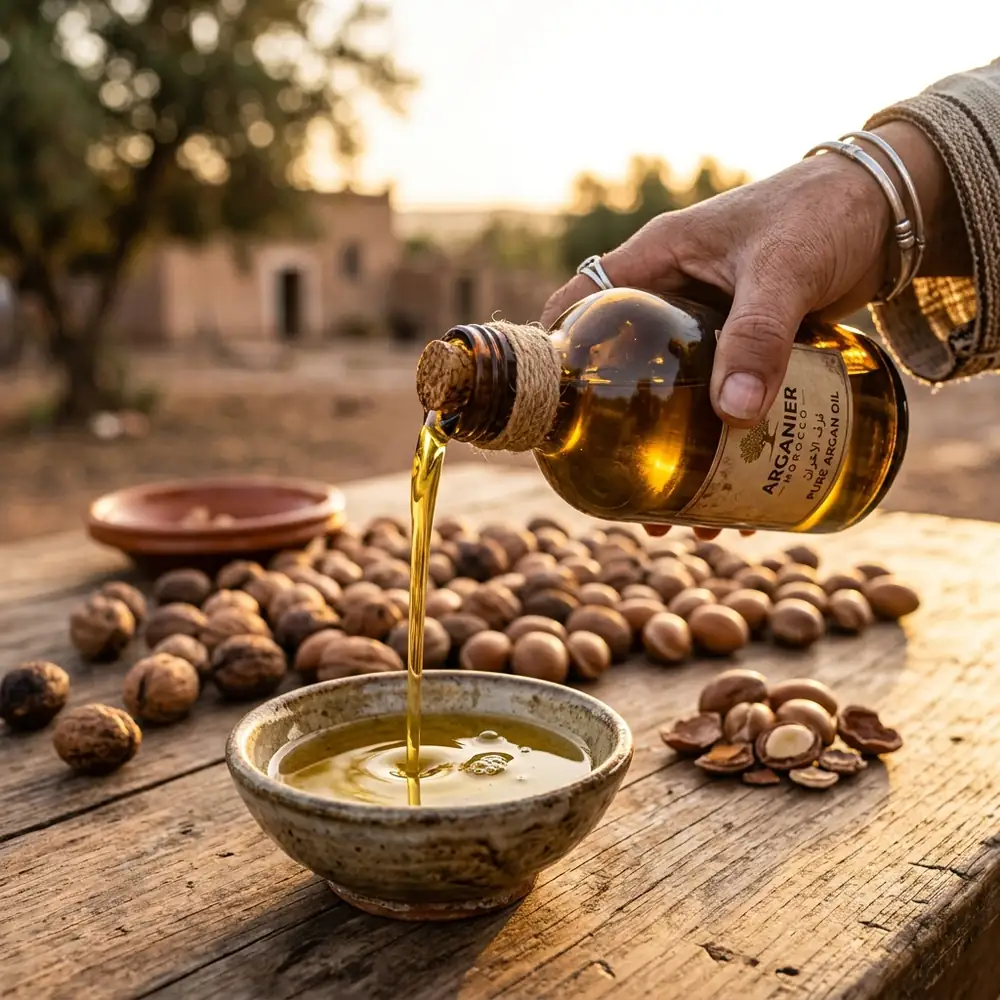
- Edible Argan Oil: The kernels are toasted before pressing, resulting in a rich, nutty flavor and a deep golden color. It is the heart of Amlou and a luxury finishing oil for salads and tagines.
- Cosmetic Argan Oil: The kernels are pressed raw, preserving the maximum concentration of Vitamin E and antioxidants. It is nature’s most powerful serum for skin and hair.
Expert Tips for Visiting the Argan Region
- The Agadir-Essaouira Road: Drive along the coast between these two cities to see the most beautiful Argan forests and perhaps spot the famous climbing goats.
- Visit a Cooperative: Stop at a recognized women’s cooperative rather than a roadside stall. You’ll see the manual process and ensure your money goes directly to the women who did the work.
- Sustainable Souvenirs: Look for the “Protected Geographical Indication” (IGP) label when buying your oil.
To Keep the Conversation Going The Pride of the South
The Argan tree is a living proof of the resilience of the Moroccan land and its people. Like my grandmother at her grinding stone, the women who tend these forests put their whole selves into what they create. By supporting the Argan industry, we preserve a prehistoric forest and honor the women who guard it. Whether you cook with it or put it on your skin — have you found your favorite way to use “Liquid Gold”? Share it with us.
Frequently Asked Questions (FAQ)
Q1: Do goats really climb the Argan trees? A: Yes! Goats love the fruit of the Argan tree. During the summer months, you can often see dozens of goats balanced on the branches of a single tree.
Q2: Can I transplant an Argan tree to my country? A: Many have tried, but the Argan tree is notoriously difficult to grow outside its native Moroccan habitat. It requires the specific soil and sea-mist climate of the Souss region to thrive and produce fruit.
Q3: How can I tell if Argan oil is authentic? A: Pure cosmetic Argan oil should soak into the skin quickly without feeling greasy. Pure culinary oil should have a distinct, delicious nutty aroma. Beware of oils with no scent or very strange colors.
Experience the true heart of Moroccan heritage through its traditions. Join us in preserving these ancestral rituals.
What People Are Saying
No comments yet. Be the first — we'd love to hear from you.
H. Elmrabet
A Moroccan cultural writer dedicated to documenting the authentic voice, history, and heritage of the Kingdom. Writing from within — to share what truly makes Morocco extraordinary.
Our Mission →