The Berbers and the Clay: How the Tagine Pot Changed Cooking Forever
The Berbers and the Clay: How the Tagine Pot Changed Cooking Forever
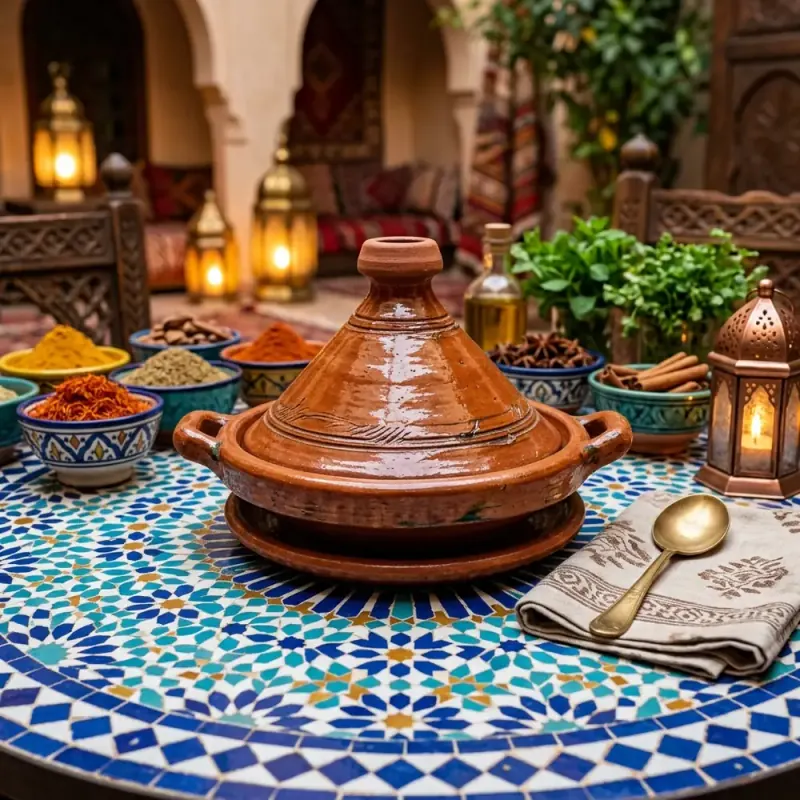
Long before modern slow cookers existed, the indigenous Amazigh (Berber) people of North Africa engineered a culinary masterpiece out of local earth. The Moroccan tagine is not just a dish; it is a 12-century-old piece of functional technology. Its iconic, sweeping conical lid is a brilliant design born out of absolute necessity in the harsh, dry landscapes of the Atlas Mountains.
Why does a Moroccan tagine have a cone-shaped lid?
The unique shape of the tagine lid was specifically designed for cooking in water-scarce environments.
- As the stew simmers over charcoal, the moisture inside evaporates and rises as steam.
- The tall, cooler cone causes the steam to immediately condense into water droplets.
- These droplets roll down the sloped sides and fall directly back into the food, constantly basting the meat.
- This closed-loop system allows tough cuts of meat to become meltingly tender using almost no added water.
The earthy flavor of unglazed clay
Our ancestors passed down the knowledge that the pot itself is an active ingredient in the recipe. Traditional, unglazed terracotta tagines are highly porous. Before their first use, they must be soaked in water and rubbed with oil or animal fat, a process known as ‘curing.’ Over years of use, the porous clay absorbs the ghosts of a thousand meals—the cumin, the garlic, the rendered lamb fat—imparting a profound, earthy depth to the food that metal or glass pots can never replicate.
How to care for an authentic clay tagine
- Never subject a clay tagine to extreme temperature changes; always place a heat diffuser between the pot and the stove to prevent cracking.
- Wash your unglazed tagine only with hot water and baking soda; never use chemical dish soap, as the porous clay will absorb the soapy taste.
The Invisible Invitation
The charcoal is glowing red, and the clay pot is beginning to sing its slow, bubbling song. We have reserved a cushion for you by the fire in our Atlas Mountain home. Come lift the lid and discover the magic of our ancestors.
Experience the true heart of Moroccan heritage through its traditions. Join us in preserving these ancestral rituals.
What People Are Saying
No comments yet. Be the first — we'd love to hear from you.
Farisse ahmed
A Moroccan cultural writer dedicated to documenting the authentic voice, history, and heritage of the Kingdom. Writing from within — to share what truly makes Morocco extraordinary.
Our Mission →