Chefchaouen: Why Is the City Painted in 50 Shades of Blue?
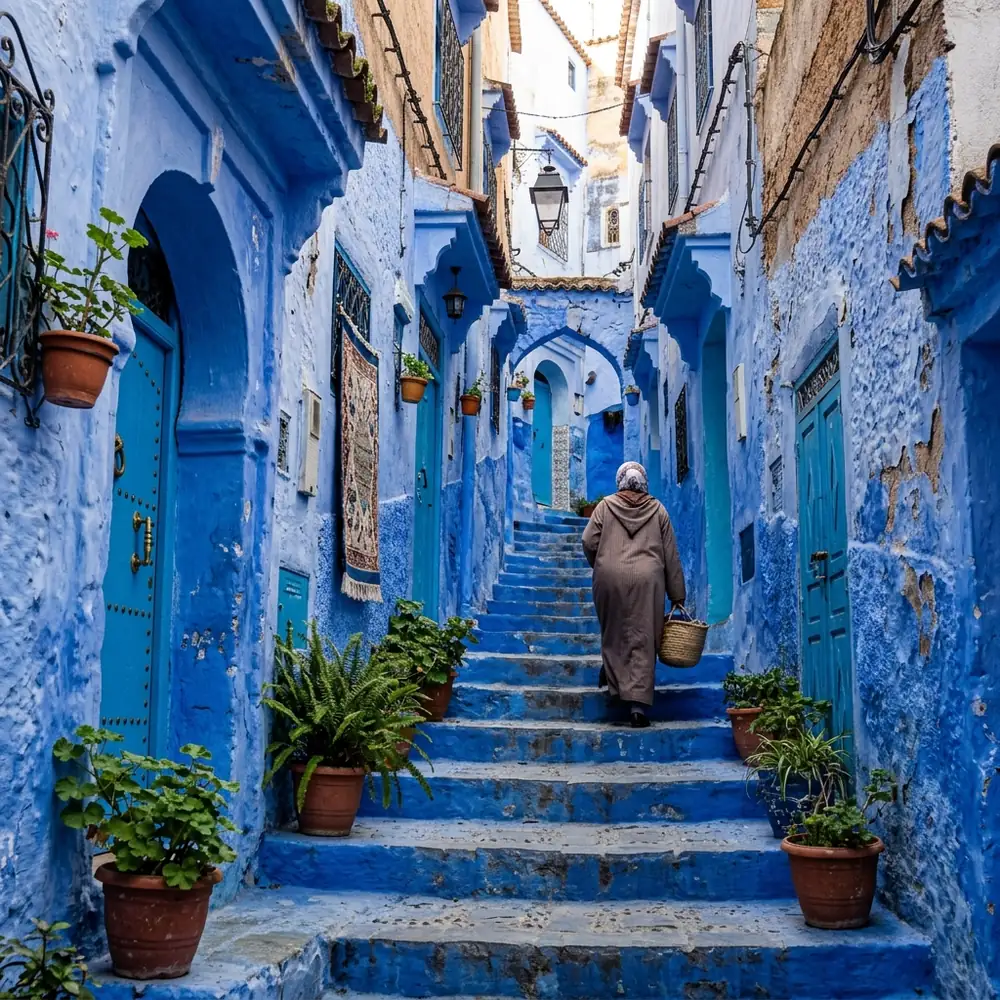
I used to spend summer weeks at my aunt’s house in the Rif region, and every time we drove into Chefchaouen I’d press my face against the car window like a child seeing snow for the first time. The blue doesn’t hit you all at once — it seeps in, alley by alley, staircase by staircase, until you realize the whole world has shifted a shade cooler and calmer. Chefchaouen (or simply “Chaouen”) is not a fairy tale — it’s better than that. It’s a real city, painted blue by real people, carrying a history of refuge and resilience behind every brushstroke.
The Mystery of the Blue: A Legacy of Sanctuary
Travelers often ask: Why blue? While there are many theories, the most beautiful and historical one relates to the city’s role as a refuge.
- The Jewish Heritage: In the 15th and 20th centuries, waves of Jewish refugees fleeing persecution in Europe found safety in Chefchaouen. They began painting the walls blue to represent the sky and heaven, a reminder to keep their lives focused on the spiritual.
- Practical Benefits: Local residents also say the blue helps keep the houses cool in the summer and acts as a natural deterrent for mosquitoes.
- A Living Tradition: Today, the residents continue the tradition, hand-painting their houses several times a year to keep the city’s signature glow alive.
The Mediterranean Diet: A UNESCO Jewel
Chefchaouen is not just a feast for the eyes; it is one of the four global communities recognized by UNESCO for the Mediterranean Diet.
- Wild Herbs: The surrounding Rif mountains provide an abundance of wild oregano, thyme, and lavender that flavor the local dishes.
- Goat Cheese (Jben): The signature product of the region, always served fresh and often wrapped in palm leaves.
- The Olive Oil: Pressed from local mountain groves, it is deep, spicy, and foundational to every meal.
Exploring the “Horned” City
Beyond the blue walls, Chefchaouen offers a slower pace of life that is refreshing after the hustle of Fes or Marrakech.
- Ras el-Maa Waterfall: A peaceful spot where the mountain spring water gushes into the town, and where you can still see local women washing rugs in the traditional way.
- The Spanish Mosque: A 20-minute hike up the hill that offers the most iconic panoramic view of the blue city at sunset.
Tips for Your Visit to Chaouen
- Wear Comfortable Shoes: The city is a maze of steep stairs and cobblestones. Your knees will thank you for wearing sneakers!
- Early Morning Walks: To get those perfect photos without the crowds, head out at 7:00 AM. The light hitting the blue walls during the “golden hour” is magical.
- Respect the Locals: While it is a tourist hub, Chefchaouen is a conservative and peaceful community. Always ask before taking photos of people.
To Keep the Conversation Going A Sanctuary for the Soul
Chefchaouen is more than just a destination; it’s a mood. It invites you to breathe, to slow down, and to find beauty in a single color worn a thousand different ways. My advice: put your phone away for one morning and just walk. You’ll be surprised what you notice when you’re not trying to frame a shot. What was your most unexpected discovery in Chaouen? Leave it in the comments.
Frequently Asked Questions (FAQ)
Q1: What does “Chefchaouen” actually mean? A: In the local Amazigh (Berber) language, “Chaouen” means “horns,” referring to the two mountain peaks that overlook the city. “Chef” means “to look at.”
Q2: Is Chefchaouen expensive for travelers? A: Generally, no. It is one of the more affordable cities in Morocco, offering great value for guesthouses and incredible street food.
Q3: Can I visit Chefchaouen as a day trip from Tangier? A: While possible, it’s a 2.5-hour drive each way. We highly recommend staying at least one night to experience the city’s peaceful atmosphere after the day-trippers have left.
Experience the true heart of Moroccan heritage through its traditions. Join us in preserving these ancestral rituals.
What People Are Saying
No comments yet. Be the first — we'd love to hear from you.
H. Elmrabet
A Moroccan cultural writer dedicated to documenting the authentic voice, history, and heritage of the Kingdom. Writing from within — to share what truly makes Morocco extraordinary.
Our Mission →