Dates of the Desert: Majhool vs. Deglet Nour
If you are welcomed into a Moroccan home for a major celebration—a wedding, a birth, or a religious holiday—you will not be offered a pastry first. You will be offered a date, usually served alongside a small glass of milk perfumed with orange blossom water.
Dates (Tmar) are the ancient candy of the desert. While the palm groves of the Tafilalet region in the Sahara produce dozens of varieties, two reign supreme.
The King: Majhool (Medjool)
The Majhool date originated in Morocco, though it is now grown worldwide. It is massive, incredibly plump, and deeply wrinkled. Biting into a Majhool date is like biting into a piece of soft, natural caramel.
Because of their size and softness, they are rarely cooked. Instead, they are eaten fresh or split open, pitted, and stuffed with a fragrant almond and orange blossom paste (Tmar M3amar) to be served at royal banquets.
The Translucent Beauty: Deglet Nour
Deglet Nour translates to “Finger of Light.” Hold one up to the sun, and you will see why: the flesh is almost translucent, glowing amber around the pit.
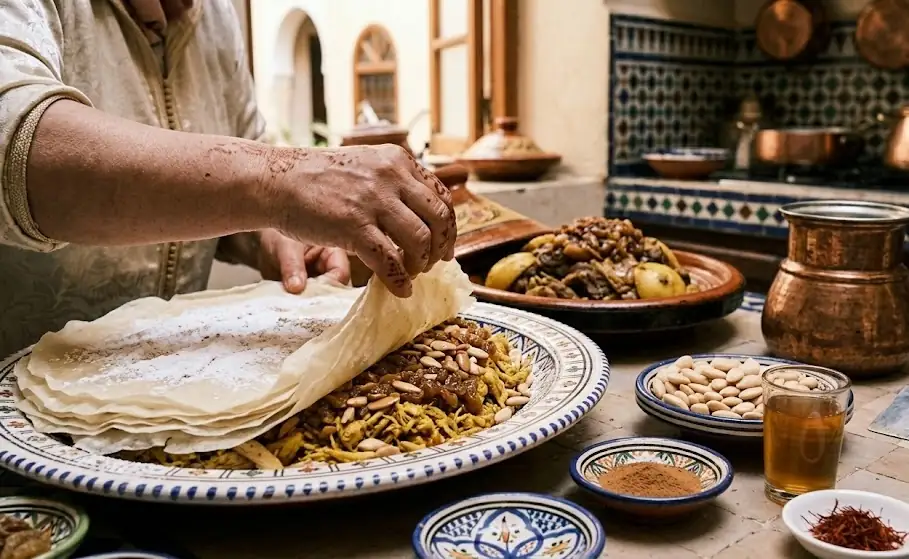
Compared to the Majhool, the Deglet Nour is firmer, slightly drier, and has a delicate, honeyed sweetness rather than a heavy caramel flavor. Because they hold their shape perfectly, they are often the date of choice for cooking. They are chopped into sweet couscous (Seffa) or slow-cooked in savory meat tajines alongside toasted almonds.
Whether you are breaking the fast of Ramadan with a Harira soup or welcoming a guest, understanding your dates is the first step in understanding Moroccan hospitality.
Experience the true heart of Moroccan heritage through its traditions. Join us in preserving these ancestral rituals.
What People Are Saying
No comments yet. Be the first — we'd love to hear from you.
Ghina Mrabet
A Moroccan cultural writer dedicated to documenting the authentic voice, history, and heritage of the Kingdom. Writing from within — to share what truly makes Morocco extraordinary.
Our Mission →