Galangal (Khoudnjal): The Warming Root of the Winter Tea
Galangal (Khoudnjal): The Warming Root of the Winter Tea
When the winter rains flood the medinas of our Kingdom, the street vendors replace their fresh fruit juices with massive, steaming brass urns. These urns contain a dark, intensely aromatic brew that smells sharply of pine, mustard, and black pepper. This is Khoudnjal tea, a fierce infusion built entirely around the Galangal root. It is not a casual beverage; it is a rapid-response medicinal tonic designed to banish the cold from the bones.
What is the difference between Galangal and Ginger?
Though they belong to the same rhizome family, their chemical properties and roles in traditional Moroccan herbalism are vastly different.
- Ginger (Skinsbir): Provides a sweet, citrusy heat that builds slowly. It is primarily used in daily cooking to flavor chicken and vegetable tagines.
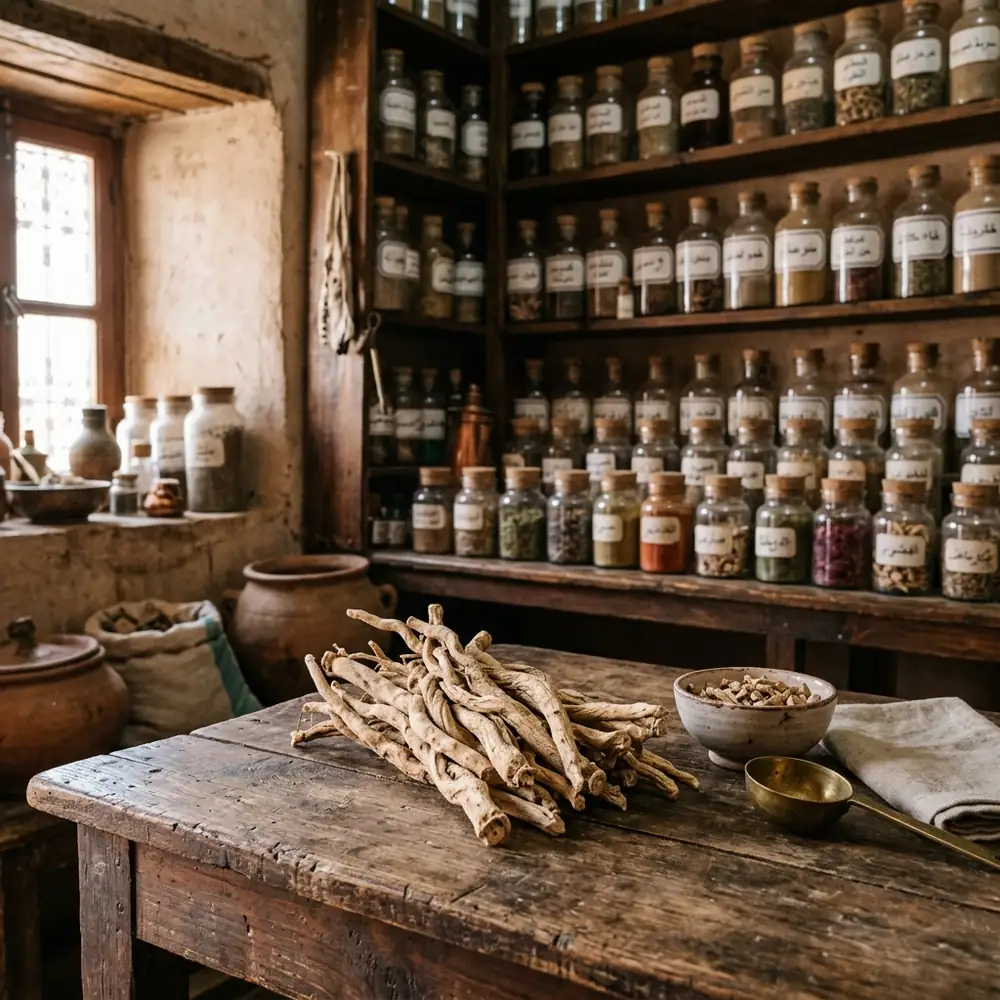
- Galangal (Khoudnjal): Possesses an aggressive, sharp, and almost camphorous heat. It is rarely used in daily cooking but is highly prized by apothecaries as a potent circulatory stimulant.
- Khoudnjal acts as a powerful vasodilator, instantly expanding the blood vessels and rushing warmth to the freezing extremities of the hands and feet.
The fire of the street vendor
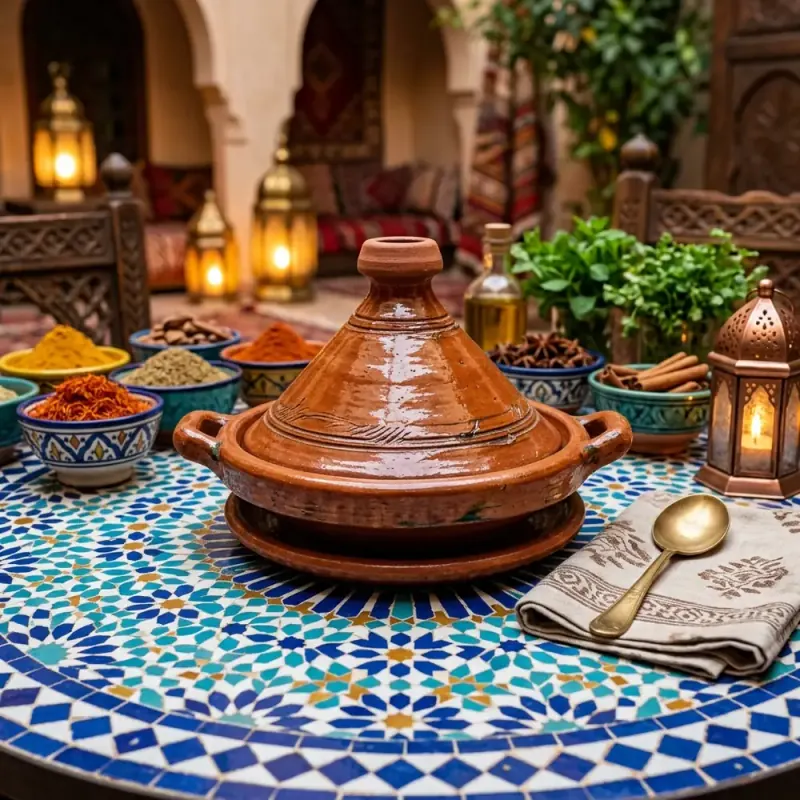
The traditional preparation of Khoudnjal is an intense, multi-spice decoction. The street vendor does not merely steep the root; he boils heavily bruised galangal roots for hours alongside cinnamon sticks, whole cloves, and star anise. The resulting dark liquid is so powerful that it is often cut with a splash of sweet black tea or heavily sweetened with raw cane sugar to make the intense heat palatable.
How to prepare a Khoudnjal tonic at home
- Do not attempt to grate dried galangal with a kitchen grater; the root is as hard as wood. You must strike it heavily with a stone or a heavy pestle to splinter it before boiling.
- Limit your consumption to a single small glass on exceptionally cold nights, as its intense stimulating properties can easily cause insomnia if drunk too late.
The Invisible Invitation
The rain is cold, but the brass urn on the corner is radiating heat. We have poured a steaming, dark glass just for you, sweetened with honey and ancient spices. Step out of the cold, and let the fire of the root warm your spirit.
Experience the true heart of Moroccan heritage through its traditions. Join us in preserving these ancestral rituals.
What People Are Saying
No comments yet. Be the first — we'd love to hear from you.
Ghina Mrabet
A Moroccan cultural writer dedicated to documenting the authentic voice, history, and heritage of the Kingdom. Writing from within — to share what truly makes Morocco extraordinary.
Our Mission →