Imouzzer des Ida Outanane: The Atlas Waterfall Village an Hour from Agadir That Nobody Goes To
Imouzzer des Ida Outanane: A Village That Has Not Been Overexposed Yet
I want to write about a place carefully, because the act of writing about a place that is currently not heavily visited is also, if the writing is seen by enough people, a contribution to its becoming heavily visited, which changes it. I have thought about whether to include Imouzzer des Ida Outanane in this collection and decided that the realistic readership of this article is not large enough to materially affect the village’s character, and that people who seek out an article about a small Atlas village are probably the kind of visitors who will engage with it respectfully. If I am wrong about either of these assessments, I apologize to the village in advance.
Imouzzer des Ida Outanane — the “des Ida Outanane” distinguishing it from the other Imouzer in the Middle Atlas, near Ifrane — is a small Amazigh village in the western High Atlas, approximately 60 kilometers inland from Agadir along a road that is paved for its entirety but that climbs through terrain that would be described as dramatic in a tourist brochure and that is accurately described as requiring attention while driving.
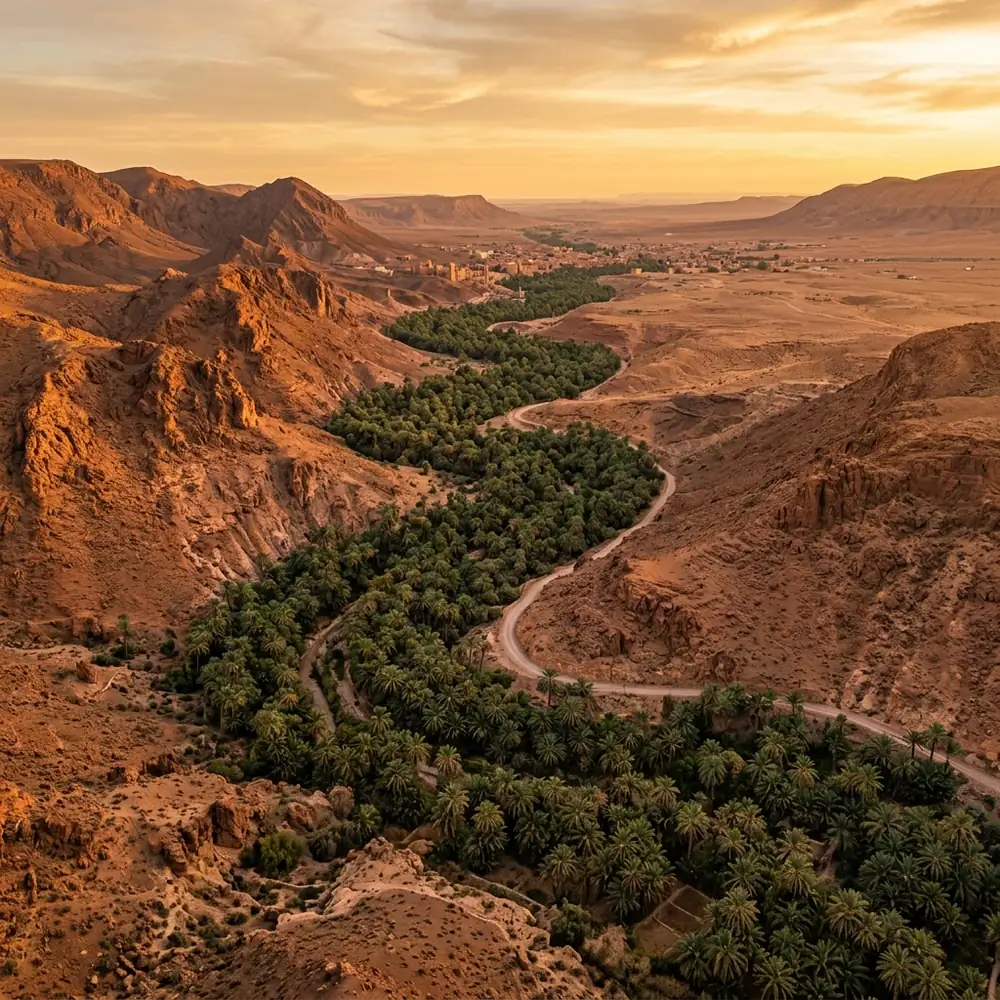
The road from the coast ascends from the Souss plain through argan forest — the argan trees getting larger and older as the altitude increases, the forest thickening as the road gains elevation, the air noticeably cooling over the thirty-kilometer climb. The road passes through several small villages, each with the characteristic flat-roofed Souss architecture and the occasional mule or goat herd crossing the road without urgency. The valley narrows. Then it opens into the plateau where Imouzzer sits.
What Is There at Imouzzer and What Is It Like?
The village is small enough that “what to do” and “what there is” are essentially the same list. The waterfall — Aïn Imouzzer, “the spring of Imouzzer” — is the primary reason people come, and it only runs reliably from roughly December through April, after the autumn and winter rains have recharged the springs above the village. In a good rain year, the fall is substantial: a forty-meter drop into a pool at the base of a limestone cliff, with the specific roaring that a significant waterfall produces in an enclosed valley and that you can hear before you can see it.
In a dry year, or in summer, the fall is reduced to a trickle or absent. The tourist information about Imouzzer’s waterfall is optimistic year-round in a way that does not reflect this seasonality, which is worth knowing before planning specifically around the fall. Come between January and March for the best probability of a running waterfall. Come at any time for the landscape, which does not depend on rainfall.
The village square — the focal point of Imouzzer’s social geography — has a single café that serves mint tea and simple food. It is the kind of café that exists in every Moroccan village of a certain size: functional, unhurried, with plastic chairs and metal tables and the sound of a television inside and the sound of birds outside. The village’s inhabitants use it as their social center; visitors who arrive and want to eat can order here and are welcome to stay as long as they like.
What Is the Agricultural Life of Imouzzer?
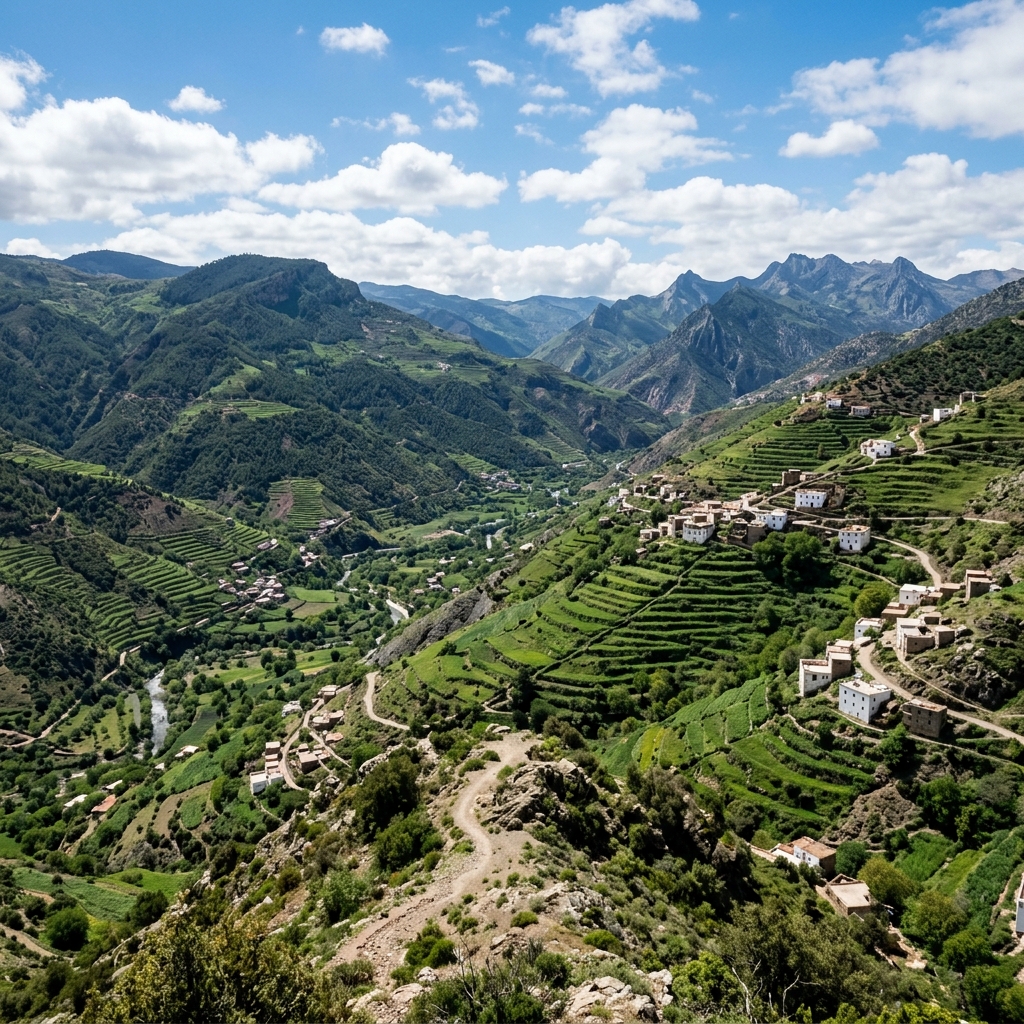
The village is surrounded by terraced agriculture — olive groves, almond trees, fig trees, some arable terraces for grain — organized in the vertical bands that mountain farming creates when slope and water management require it. The terrace walls are stone, constructed and maintained by the village’s agricultural families over generations; the oldest terraces have the slightly irregular, deeply weathered quality of very old stonework, and the oldest olive trees are correspondingly ancient, with the gnarled, hollowed trunks of trees that have been producing for centuries.
The local olive oil — pressed in the village’s own traditional mill (maasara), operated during the olive harvest season between November and January — is available directly from producers in quantities from a liter upward. It is excellent: fresh, fruity, slightly peppery, the specific character of hand-harvested Atlas olives pressed within days of picking. The price is local-market rather than tourist-market. This is one of the genuine advantages of visiting a place before it has developed tourism infrastructure.
The honey sold in Imouzzer — from apiaries positioned in the argan forest and the wildflower meadows of the higher plateau — is similarly direct-from-producer and similarly excellent. The argan blossom honey, in particular, has a floral character specific to the argan flower that is not available in any commercial Moroccan honey brand and that is one of the most unusual flavors I know.
How Do You Get to Imouzzer and What Preparation Is Needed?
The road from Agadir is straightforward but winding in its upper sections, and the drive takes approximately an hour and fifteen minutes depending on driving pace. A standard car is adequate for the road, though the condition of some sections benefits from higher clearance. Public transport exists — shared taxis from Agadir’s bus station to Imouzzer run on a schedule that is approximately daily — but gives you less flexibility for exploring the surrounding countryside.
Bring water, because the café in the village has limited stock and the surrounding landscape has no commercial infrastructure. Bring lunch if you want more than tea and bread. Come with enough time to walk the path from the village to the waterfall base and then to climb the path above the fall to the plateau, which provides a view over the entire valley and the Souss plain visible in the distance — approximately two hours of walking total, on paths that are clear but not formally maintained.
The Invisible Invitation
You have parked the car at the edge of the village where the road ends. The path to the waterfall is marked by a worn groove in the earth and the sound of water increasing as you walk. In fifteen minutes you can hear the fall clearly. In twenty minutes you can see it — the white thread of water against the limestone cliff, the pool at the base still as a mirror this morning before the wind picks up. Sit at the pool’s edge for as long as you want. There is nobody here today. The village is behind you and the mountain is above you and the argan forest is on both sides and the Souss plain is invisible below the valley’s edge. This is Morocco that has not yet been organized for your visit. It is, for that reason, slightly more itself than the places that have. Drink from the water if you want to — it is safe, it is spring water, it is cold. Come back next winter when the fall is larger.
SEO Meta Description: What is Imouzzer des Ida Outanane in Morocco? The Atlas waterfall village near Agadir — seasonal waterfall timing, argan honey and olive oil direct from producers, the drive, and why to visit in February.
Experience the true heart of Moroccan heritage through its traditions. Join us in preserving these ancestral rituals.
What People Are Saying
No comments yet. Be the first — we'd love to hear from you.
Youssef Amazigh
A Moroccan cultural writer dedicated to documenting the authentic voice, history, and heritage of the Kingdom. Writing from within — to share what truly makes Morocco extraordinary.
Our Mission →