Koutoubia: The Architecture of the Soul in Marrakech
The Koutoubia Mosque: The Guardian of Marrakech
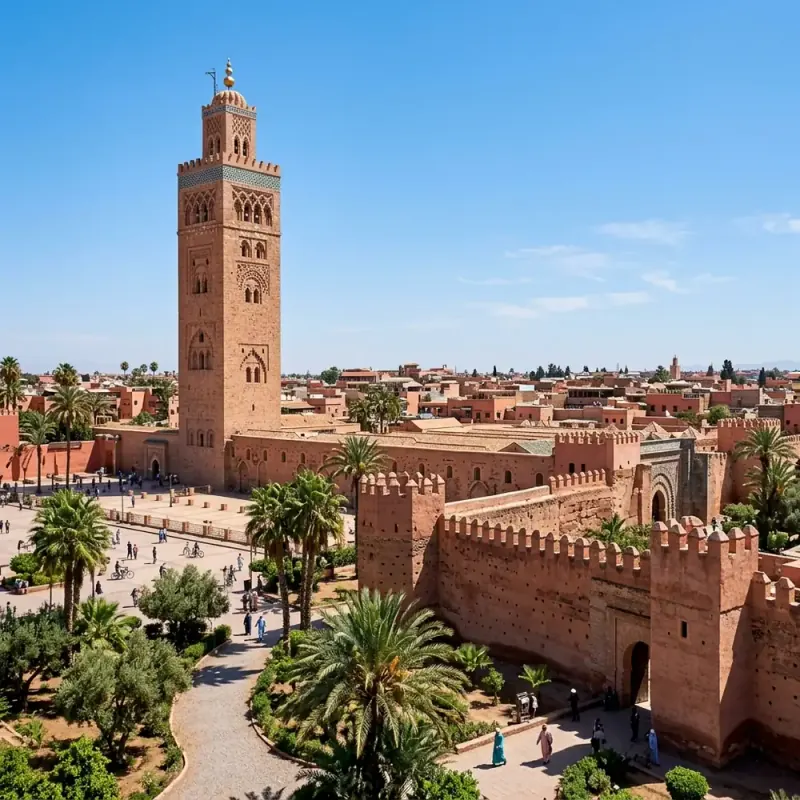
My family used to tell me that if you ever get lost in the winding souks of Marrakech, just look up. For me and every local, the Koutoubia Mosque is our steadfast compass. For nearly 900 years, its magnificent minaret—a true marvel of Almohad design—has guided us home. It’s the first thing you see when you arrive in our red city and the last silhouette you admire as you leave. It is the spiritual anchor of our community.
The Legend of the “Booksellers”
The name “Koutoubia” comes from the Arabic word Kutubiyyin (booksellers).
- The Ancient Market: In the 12th century, the square surrounding the mosque was the center of the Marrakech book trade, with over 100 stalls selling manuscripts and scrolls.
- A Learned Legacy: This reminds us that Marrakech has always been a city of scholars and poets as much as it has been a city of warriors and traders.
A Masterpiece of Almohad Design
Completed under the reign of Sultan Yaqub al-Mansur in 1199, the Koutoubia represents the peak of Almohad architectural purity.
- The Minaret: Standing 77 meters tall, it is built of reddish-pink sandstone. Its design—four square faces decorated with different geometric patterns—inspired the Giralda in Seville and the Hassan Tower in Rabat.
- The Golden Orbs: At the very top of the minaret are three large copper orbs. Legend says they were originally made of pure gold from the jewelry of the Sultan’s wife, melted down as a gesture of piety.
- The Hidden Geometry: The mosque was built twice. The first version was found to be slightly misaligned with Mecca, so the Sultan ordered it destroyed and rebuilt perfectly—the ruins of the first mosque are still visible as a stone garden next to the current building.
The Pulse of the City
The Koutoubia is the spiritual anchor of the city.
- The Call to Prayer: When the Muezzin calls from the Koutoubia, the entire city of Marrakech pauses. The sound carries across the Jemaa El Fna and into the deepest corners of the souks.
- The Gardens: The Koutoubia gardens offer a peaceful, rose-scented escape from the heat and noise of the city, dominated by the majestic sight of the minaret.
Tips for Travelers
- A Landmark Entry: While the interior of the mosque is reserved for Muslims, the exterior and the archaeological gardens are open to everyone and are free to explore.
- Sunset Photography: The best time to photograph the Koutoubia is at sunset, when the red sandstone glows a deep, fiery orange against the purple Atlas mountains.
- The View from Above: Visit any rooftop cafe in the Jemaa El Fna for a panoramic view of the mosque as the lights come on at dusk.
Higher Than the Highest
In Marrakech, no building is allowed to be taller than the Koutoubia. It remains the highest point in the medina, a gentle reminder that our spiritual grounding always comes first. Next time you visit, try finding your way through the old town using only this glorious minaret as your guide. Let me know if you discover any hidden alleys along the way!
Frequently Asked Questions (FAQ)
Q1: Can non-Muslims enter the Koutoubia Mosque? A: No, like most active mosques in Morocco, the prayer hall is strictly reserved for Muslims. However, the gardens and the exterior architecture are some of the most beautiful in the city.
Q2: Why is the tower called a “minaret”? A: “Minaret” comes from the Arabic word Manarah, which means “lighthouse” or “place of fire.” Historically, lanterns were lit on top of the towers to guide travelers and announce the times of prayer.
Q3: How old is the Koutoubia? A: The current building was completed in 1197, making it over 820 years old. It has survived numerous earthquakes, including the major one in 2023, proving the brilliant engineering of our Almohad builders.
Experience the true heart of Moroccan heritage through its traditions. Join us in preserving these ancestral rituals.
What People Are Saying
No comments yet. Be the first — we'd love to hear from you.
H. Elmrabet
A Moroccan cultural writer dedicated to documenting the authentic voice, history, and heritage of the Kingdom. Writing from within — to share what truly makes Morocco extraordinary.
Our Mission →