Sleeping in a Moroccan Riad: The Complete Insider Guide
Moroccan Riads: Waking Up Inside a Living Piece of History
My grandmother always said, “A house is not a home unless it has a courtyard where children can run and the sky is always close.” She was describing, without knowing it, the exact soul of the Riad — the most iconic form of Moroccan domestic architecture.
Growing up in Fes, I ran through the corridors of our family home past centuries-old Zellige tiles and carved plaster walls while the scent of orange blossom from our central courtyard (Wust Ad-Dar) followed me everywhere. Now, as a cultural guide and hospitality writer, I want to share with you the secrets of these magical spaces that the world has discovered — and that we Moroccans have always called home.
What Exactly is a Riad?
The word Riad (or Ryad) comes from the Arabic word Rawdh, meaning “garden.” Architecturally, it defines a traditional Moroccan house built around a central interior garden or courtyard, often featuring a fountain at its center. The philosophy is one of inward focus — the exterior walls are deliberately plain and high, offering nothing to the outside world, while all the beauty, light, and life is reserved for those privileged enough to be welcomed inside.
This is deeply Moroccan: our hospitality is intimate, our beauty is internal, and what we share with the world must first be earned through a relationship of trust.
The Anatomy of a Perfect Riad
- The Derb: The narrow, winding street that leads to the riad’s discrete wooden door. Part of the magic.
- The Sqifa: An angled entrance corridor designed specifically so that no one passing outside can see into the private courtyard. Privacy is sacred.
- The Wust Ad-Dar: The central courtyard, always a garden — featuring fountains, orange trees, jasmine, and often a small pool. This is where the riad breathes.
- The Salons (Bit): Grand reception rooms opening onto the courtyard, decorated with carved cedar ceilings (Naqqash), Zellige floors, and hand-painted plaster walls (Gbs).
- The Terrasse: The rooftop terrace is a world of its own — perfect for morning breakfasts with panoramic medina views.
How to Choose the Right Riad
Not all riads are equal. After years of exploring, here is what I look for:
1. Location within the Medina
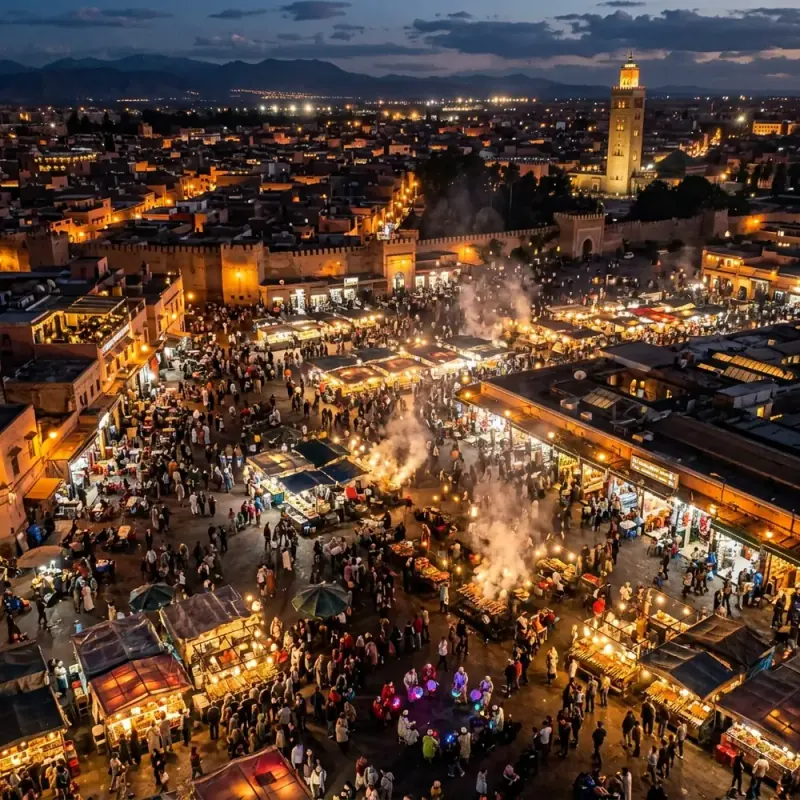
Proximity to the main squares is a double-edged sword. You want to be within walking distance of Jemaa El Fna (Marrakech) or Bou Inania Madrasa (Fes), but not on the main touristic artery. The best riads are those you have to search for, tucked away in a residential neighborhood where the call to prayer and the smell of your neighbor’s tagine are your morning alarm.
2. The Source of the Renovation
A riad renovated by a local Moroccan family or Maâlem (master craftsman) will feel different from one that has been flipped by a foreign investor. Ask your host: Who built this? The answer will tell you everything.
3. The Breakfast
A serious Moroccan riad breakfast (Ftour) should include:
- Fresh Msemen or Harcha flatbreads
- Homemade Argan oil and Amlou (almond-argan paste)
- Rghaif pancakes with honey
- Boiled eggs and a selection of Moroccan jams
- A pot of freshly brewed Atay (mint tea)
If they serve you a croissant and instant coffee, leave immediately.
The Best Riad Medinas in Morocco
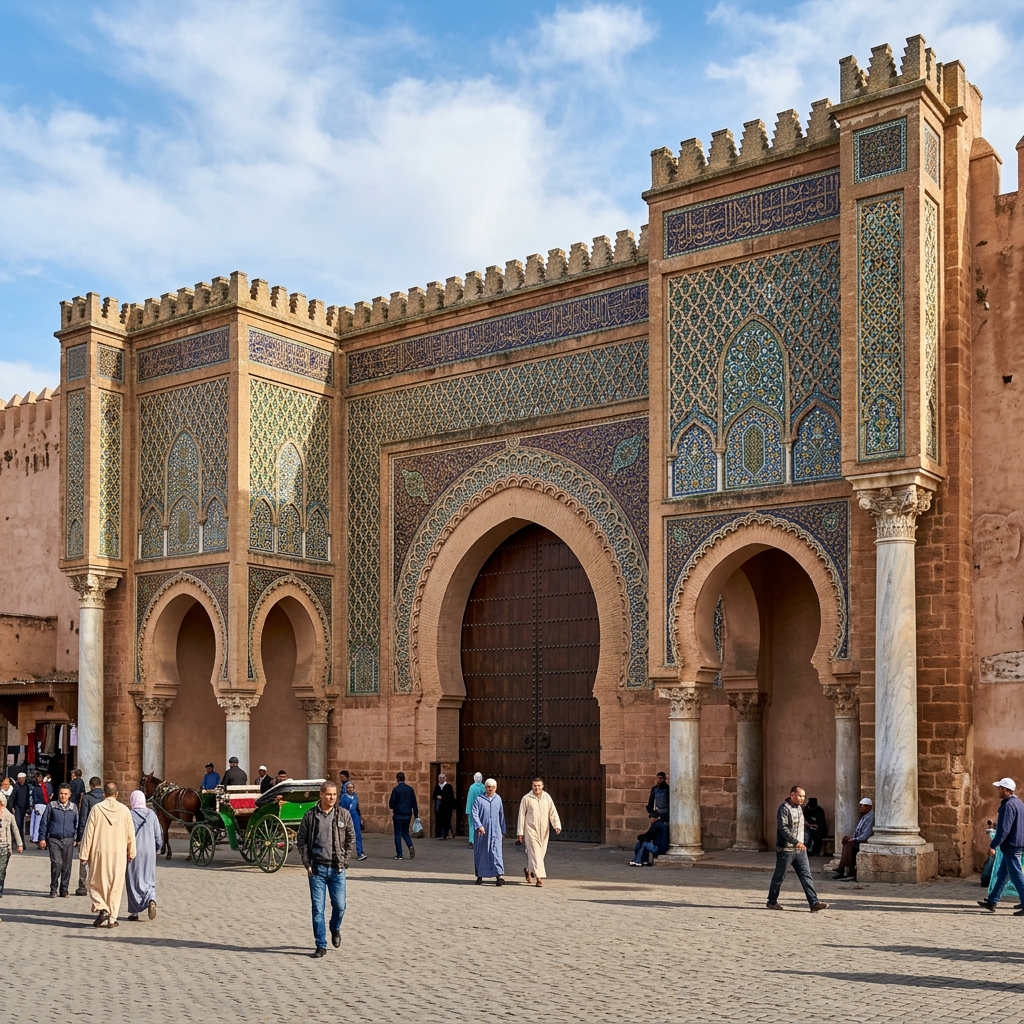
- Fes el-Bali: The most authentic. The riads here are older, the streets are narrower, and the craftsmen are still working in the same workshops as their ancestors.
- Marrakech Medina: The most international. More options, higher competition, and some spectacular renovations in the Mellah and near Mouassine fountain.
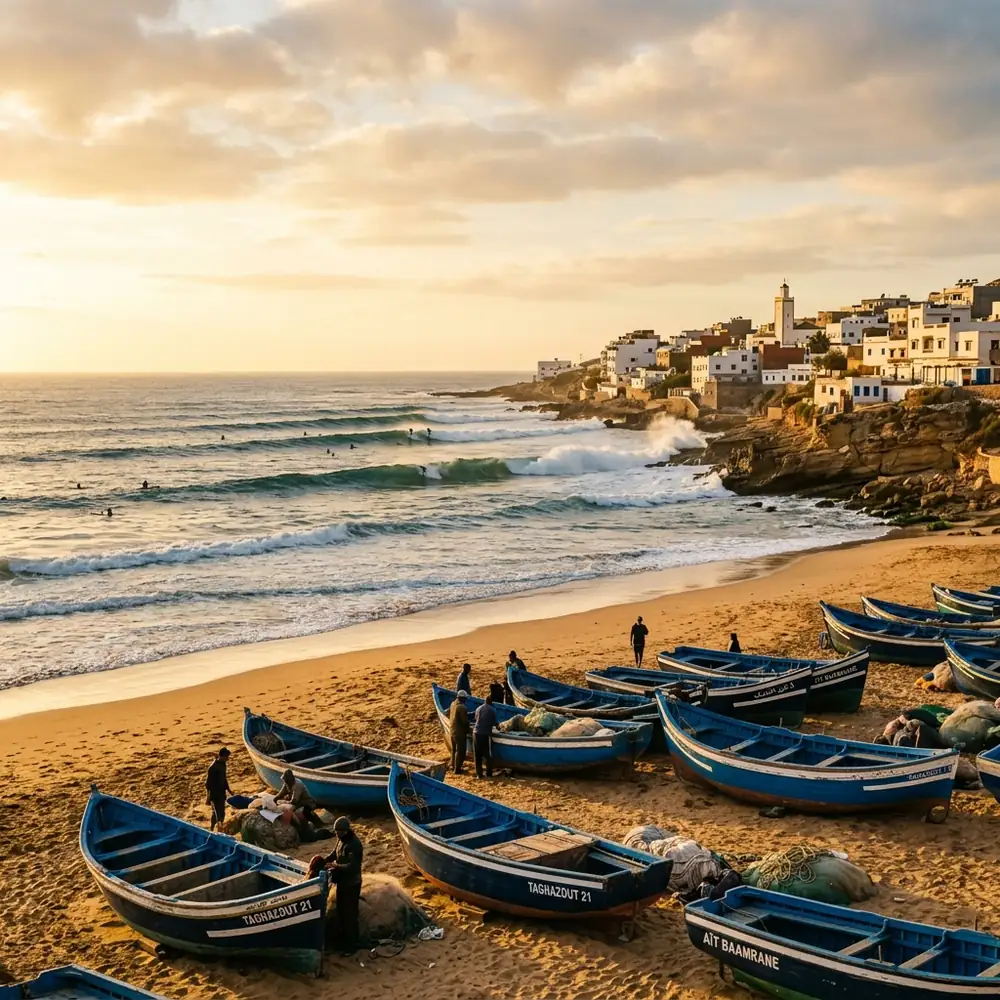
- Essaouira: The most relaxed. The Atlantic breeze runs through the open courtyards, and the riads have a blue-and-white palette reflecting the city’s ocean spirit.
More Than Just a Hotel
When you sleep in a riad, you do not check into an accommodation. You step into a way of life that has been refined over centuries. The sound of the fountain at night, the smell of the jasmine at dawn, and the warmth of the tiles under your bare feet in the morning — these are not luxury amenities; they are the memory of Morocco preserved in stone. Look for the hidden doors, and you will find your own peace inside.
Frequently Asked Questions (FAQ)
Q1: Are riads suitable for families with young children? A: Yes, the central courtyard is actually a wonderful, safe play space for children. Do ask the host about the fountain depth, as some pools can be deep.
Q2: What is the difference between a “Dar” and a “Riad”? A: Technically, a Dar is a house built around a courtyard without a garden, while a Riad specifically has a garden with plants and a fountain. In practice, many properties use both terms interchangeably.
Q3: Is it safe to navigate the Medina alleys to find your riad? A: The medina alleys can be disorienting, especially in Fes. Download an offline map (Maps.me works well) and always save the exact GPS coordinates of your riad. Many hosts will meet you at a landmark and guide you in.
Experience the true heart of Moroccan heritage through its traditions. Join us in preserving these ancestral rituals.
What People Are Saying
No comments yet. Be the first — we'd love to hear from you.
H. Elmrabet
A Moroccan cultural writer dedicated to documenting the authentic voice, history, and heritage of the Kingdom. Writing from within — to share what truly makes Morocco extraordinary.
Our Mission →