Chicken with Preserved Lemon and Olives: The Tagine That Defines Moroccan Cooking for the World

Chicken with Preserved Lemon and Olives: Why the Most Famous Moroccan Dish Deserves Its Reputation
There is a category of dishes that become famous in the wrong way — that are so widely reproduced, so frequently described, so inevitably present in any restaurant serving food from their culture, that the reputation precedes them so aggressively that the actual dish gets lost in the expectation. The chicken with preserved lemon and olive tagine is in danger of entering this category internationally, and I want to argue against its relegation there by being specific about what it is at its best.
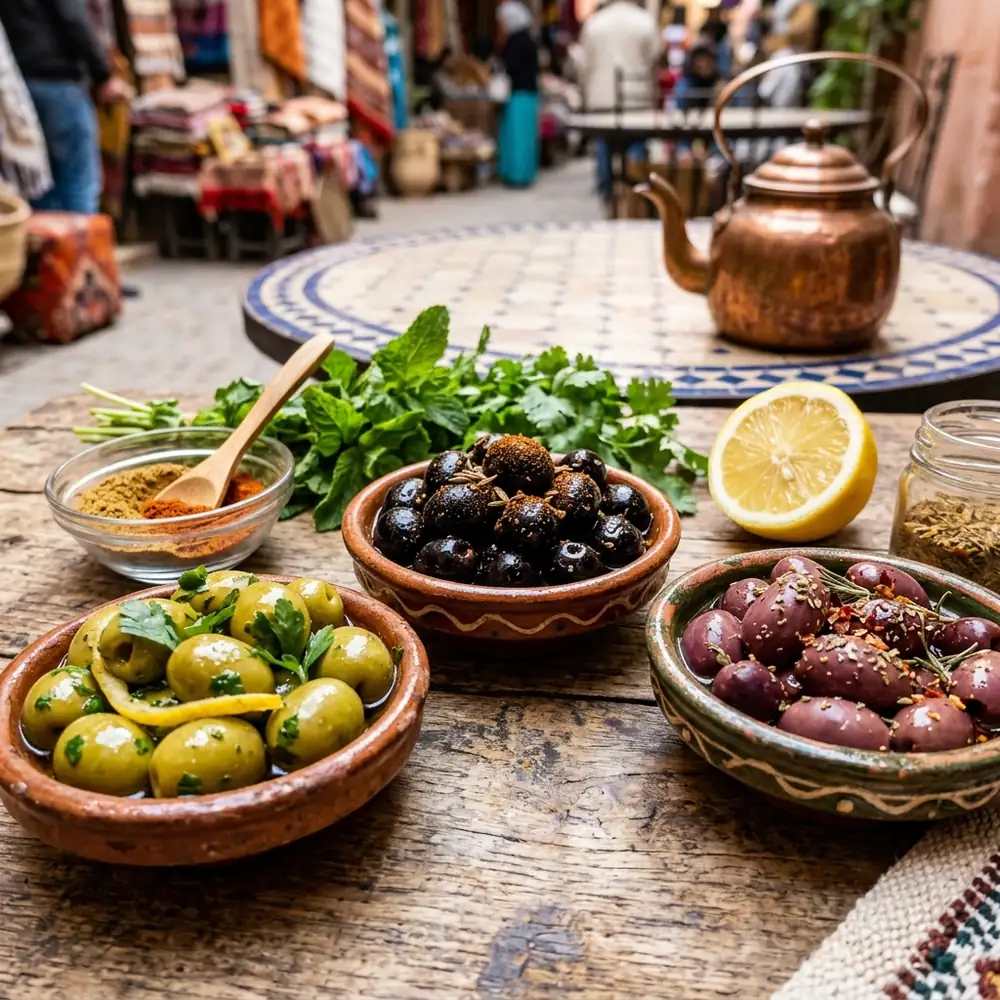
What it is at its best: a pale, saffron-gold braising sauce of extraordinary aromatic complexity, built from dissolved onion and the fat of the braising, carrying saffron and ginger and white pepper in a combination that is warm and floral without being assertively spiced. The chicken — ideally a whole chicken, cut into pieces and marinated overnight in charmoula before going into the tagine — cooked until it is falling-off-the-bone tender in this sauce. The preserved lemon rind, added in the last thirty minutes, releasing its fermented citrus depth into the sauce in a way that brightens the richness of the onion and chicken fat without making the dish taste lemony in the conventional sense. The olives — cracked green olives, large, mild — added in the last fifteen minutes, absorbing some of the saffron-gold sauce while contributing their own gentle saltiness.
The result, when everything is done correctly, is a dish that is simultaneously rich and bright, savory and aromatic, complex and completely coherent. I have made it hundreds of times. It has not become ordinary.
What Are the Three Things Most Recipes Underemphasize?
First: the overnight charmoula marinade. Most recipes allow thirty minutes to an hour of marination. This is insufficient. The charmoula — a paste of saffron, ginger, cumin, white pepper, salt, olive oil, minced preserved lemon, fresh coriander, and flat-leaf parsley — needs overnight contact with the chicken to penetrate the meat fully. A chicken marinated for thirty minutes has seasoned surface; a chicken marinated overnight has seasoned interior. The difference in the finished tagine is significant enough that this step should not be treated as optional.
Second: the onion quantity and its initial treatment. The onion — three medium onions, grated rather than chopped — is the structural element of the sauce. Grated onion dissolves more completely than chopped onion over the cooking time, producing a smooth, unified sauce rather than one with visible onion pieces. And the quantity matters: the three onions’ worth of grated onion, combined with the chicken fat released during braising and the saffron, becomes the sauce. Too little onion and the sauce is thin; the correct amount and it is the thick, glossy, coating preparation that defines this dish.
Third: the preserved lemon is the rind only. The flesh — the pulp and pith inside the preserved lemon — is too intensely salty and too acidic to add to a tagine in any significant quantity. The rind, rinsed under cold water and cut into strips or small pieces, is what goes into the dish. This is stated in most recipes but not always explained: the flesh goes into other preparations (it can be minced and added to salad dressings in very small quantities) or discarded. The rind, not the fruit.
What Is the Cooking Method and What Equipment Is Correct?
A heavy-bottomed pot, a Dutch oven, or a genuine clay tagine over a diffuser — any of these work. The clay tagine’s advantage is that it cooks slightly differently from a metal vessel: the porous clay retains a small amount of moisture and the broad, shallow conical lid creates a specific condensation pattern that returns cooking liquid to the base in a way that promotes even, gentle cooking. But the flavor difference between a clay tagine and a well-managed Dutch oven is smaller than most tagine evangelists claim, and the Dutch oven is considerably more practical on a home stove.
The chicken goes into the pot with the grated onion, the marinade scraped from the pieces, a small amount of additional saffron dissolved in warm water, and enough water to come approximately halfway up the chicken pieces — not covering, halfway. The pot is covered and the heat is set at the lowest simmer your stove produces. One hour minimum. An hour and fifteen minutes is better. The chicken should be completely tender — the leg joints should yield easily when gently pressed — before the preserved lemon and olives go in.
The olives: add them, don’t cook them for an hour. Fifteen minutes. They absorb some sauce flavor and contribute their saltiness; beyond fifteen minutes they become bitter and their texture degrades.
How Is the Dish Served and Can Anything Be Changed?
The tagine is served in its cooking vessel — either the clay tagine or a warmed serving bowl — with the sauce drizzled generously over the chicken pieces. The preserved lemon rinds and olives are arranged on top and are visible at serving; they were added last precisely so they are present as distinct elements rather than dissolved into the sauce.
Bread for scooping. No cutlery traditionally, though a spoon for the sauce is acceptable.
The one substitution that actually works: if you do not have preserved lemons (you should have preserved lemons — make a jar; wait four weeks), a small amount of fresh lemon zest plus a pinch of salt, added in the last five minutes, approximates the acid-salt dimension without the fermented depth. It is a different dish. It is still good.
The Invisible Invitation
The tagine comes to the table in its clay vessel. The color visible through the steam is the specific saffron-gold that this dish and no other produces — the gold of saffron and chicken fat and dissolved onion combined over an hour and fifteen minutes. The preserved lemon rind is visible. The olives are visible. The chicken, beneath the sauce, is the kind of tender where the meat has separated from the bone before anyone touches it. This is the moment. Tear the bread. Begin. There are dishes that are worth their reputation and dishes that are not. This one earns it, every time, when made correctly.
SEO Meta Description: How to make authentic Moroccan chicken preserved lemon olive tagine? Overnight charmoula marinade, grated onion technique, rind vs flesh of preserved lemon, and olive timing explained.
Experience the true heart of Moroccan heritage through its traditions. Join us in preserving these ancestral rituals.
What People Are Saying
No comments yet. Be the first — we'd love to hear from you.
Khadija Tahiri
A Moroccan cultural writer dedicated to documenting the authentic voice, history, and heritage of the Kingdom. Writing from within — to share what truly makes Morocco extraordinary.
Our Mission →