The Moroccan Hammam: What Actually Happens Inside and How to Go Without Getting It Wrong
The Hammam: What It Is Before It Is a Tourist Experience
The Moroccan hammam — hammam beldi, the traditional neighborhood bathhouse, as distinct from the tourist hammam luxe that has proliferated in riad hotels since the 1990s — is a public institution that has served the same function in Moroccan urban life for at least a thousand years: providing access to thorough washing and heat therapy to a population for whom private hot-water bathing was historically either unavailable (no plumbing) or impractical (no fuel for individual water heating). The hammam solved a collective hygiene problem with a collective solution, and the social dimensions of this collective solution — the time spent in the steam room, the exchange of neighborhood news, the care of each other’s bodies in the kessa scrubbing tradition — became as significant as the hygiene function over time.
This history matters because it tells you what the hammam actually is. It is not a spa. The neighborhood hammam is a utility, like a laundromat or a public well, around which social life accretes but which exists primarily to get people clean in conditions where individual alternatives are limited. Approaching the neighborhood hammam with spa expectations produces disappointment. Approaching it as a functional communal institution that Moroccan families use as part of their regular hygiene routine produces the correct experience.
How Is the Neighborhood Hammam Structured and What Are the Rooms?
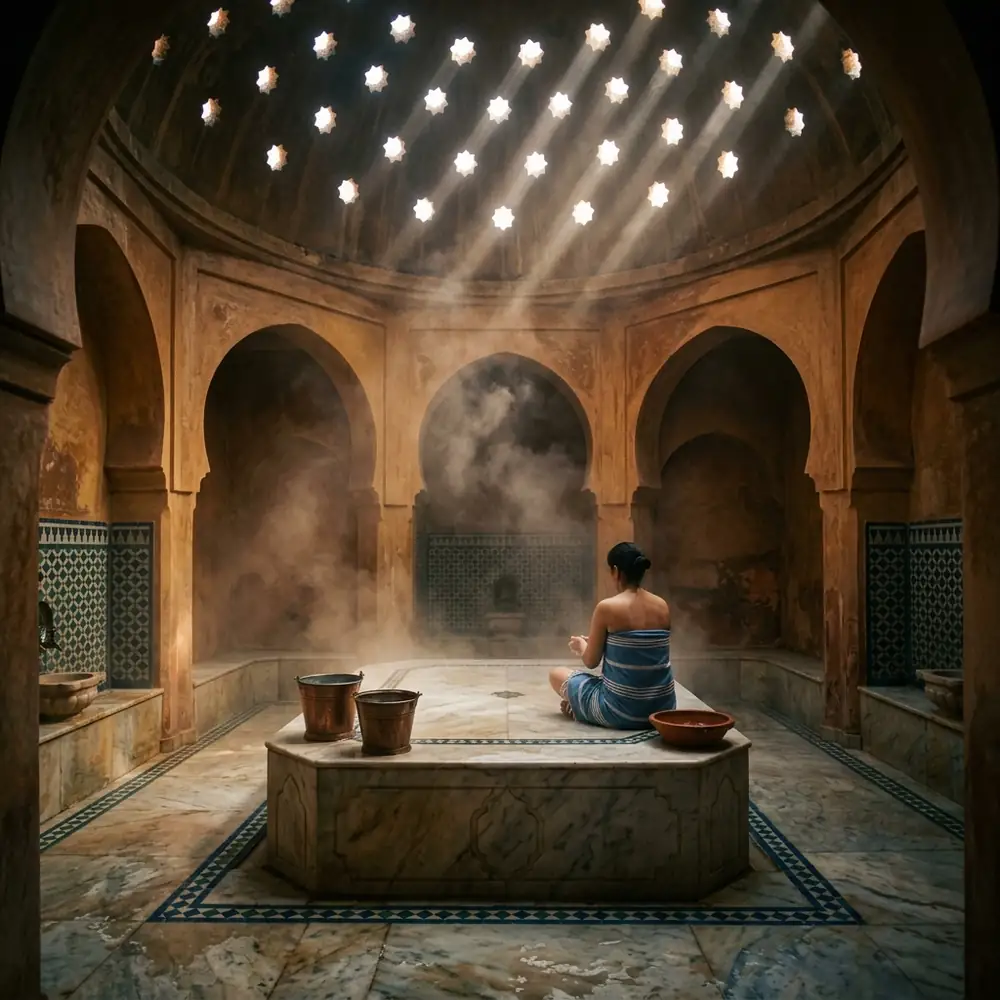
The traditional hammam layout is a sequence of rooms of increasing heat, organized around a central heating system (a wood-fired boiler, now increasingly gas) that heats both the water and the floor and benches of the hot room through a hypocaust-like radiant heating system.
The first room (barrani, the outer room): changing room and acclimatization space. This is where you undress, leave your clothes and belongings (in a locker or on a bench, attended by the hammam employee who manages this area), and prepare your bathing equipment. The temperature here is ambient — no steam, no particular heat.
The second room (wastani, the middle room): warm, with steam, intermediate temperature. You spend time here acclimatizing to the heat before proceeding to the hot room, and you return here periodically during the bathing sequence when the hot room becomes too intense. The kessa scrubbing often happens here after time in the hot room has opened the pores.
The third room (jwani, the inner room): the hot room, steam-filled, the floor and marble benches radiating heat from below. This is where you pour warm water over yourself from the buckets (plastic or metal) available throughout the hammam, sweat, and open the pores in preparation for the kessa scrub. The temperature is high enough that extended stay without acclimatization is uncomfortable; most people move between the hot and middle rooms several times.
What Is the Kessa Scrub and What Does It Do?
The kessa — the rough exfoliating glove worn on the hand and used to scrub the skin after the hot room has opened and softened the pores — is the central bathing act of the hammam. Done correctly, the kessa scrub removes the accumulated dead skin cells that normal bathing does not reach, revealing the skin underneath. The physical result — visible, immediately — is the dark grey or brown rolls of dead skin that accumulate on the skin surface during scrubbing and are rinsed away with water. This is not pleasant to describe but is visually confirming: you can see what is being removed, and the skin underneath is noticeably smoother and softer.
The kessa is used with savon beldi — the traditional black Moroccan soap made from olives, water, and potassium hydroxide — which is applied to the skin before scrubbing to soften and lubricate. The savon beldi looks alarming (it is black, nearly liquid, with a pungent olive smell) and produces a texture that is unfamiliar to users of conventional soap. It is not lathering in the conventional sense but rather a thick, oily preparation that penetrates the skin’s surface before the kessa’s abrasion works through it.
A professional kessala (the person employed in the hammam to perform the kessa service) can do this more effectively than self-service, reaching areas that are difficult to reach alone and applying the correct pressure. The kessala service has a small fee and is available in most neighborhood hammams on request.
What Do You Bring to the Hammam and What Is the Procedure?
What to bring: a change of underwear for after (you do not leave the hammam in the same underwear you wore in), a towel (or rent one from the hammam, typically available for a small fee), your kessa glove (sold at the hammam or in the souk), savon beldi if you have it (also available at the hammam), sandals or flip-flops for the hammam floors, and your bathing garment — men wear shorts or bathing shorts, women wear underwear or a bathing suit in the women’s sections.
The procedure: pay the entrance fee at the door (the fee varies by hammam and by service level — basic entry, kessa service, and argan oil massage are typically priced separately). Enter the changing room. Undress, keeping only your bathing garment. Collect a bucket. Enter the warm room. Acclimatize for five to ten minutes. Enter the hot room. Pour warm water over yourself from the bucket. Stay until you feel thoroughly warmed and sweating. Return to the warm room. Apply savon beldi and use the kessa glove for self-scrubbing, or have the kessala do it. Rinse thoroughly. Optional: a period of relaxation in the warm or outer room. Dress, exit.
The total time: one to two hours for a thorough visit. The hammam is not rushed and the neighborhood regulars typically take their time.
The Hammam’s Social Function That the Tourist Version Omits
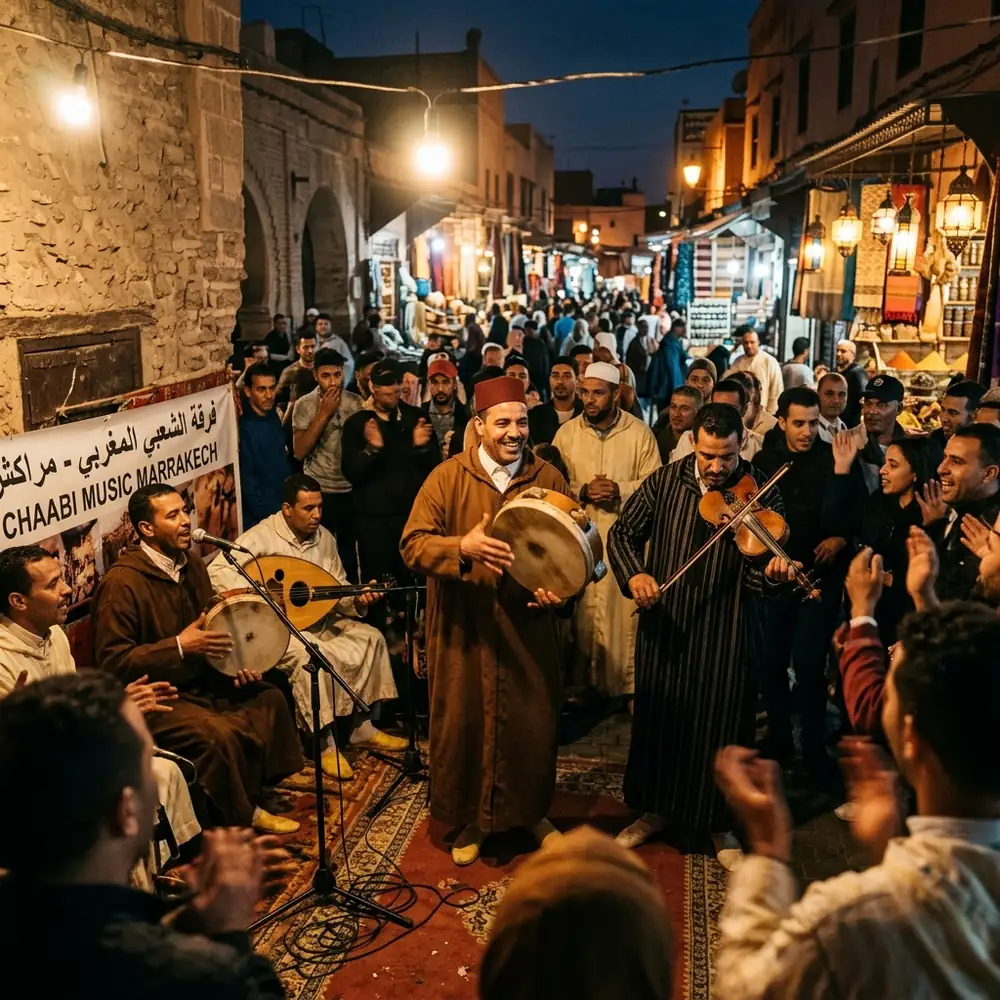
In the neighborhood hammam — particularly in the women’s sections — the bathing time is also the conversation time. Women who might not see each other during the week’s working hours meet in the hammam’s warm rooms and exchange the kind of neighborhood information — marriages, illnesses, children’s school situations, family conflicts, local politics — that sustains the social fabric of the medina community. The hammam is where this information circulates, where relationships are maintained, where the community’s social monitoring happens in the steam and the relaxed posture that heat induces.
This social function is not available in the tourist hammam, which is organized for individual or couple experiences and where other patrons are similarly anonymous visitors rather than neighbors. The neighborhood hammam’s social dimension requires being part of the neighborhood, which most visitors are not. This is not a criticism of the tourist hammam — it serves a different purpose for a different clientele — but it is why the tourist hammam and the neighborhood hammam are genuinely different experiences despite using the same steam and the same kessa.
The Invisible Invitation
Go to the neighborhood hammam — ask at your accommodation where the nearest hammam beldi is, and go to that one rather than the riad’s own hammam facility. The entrance fee will be several dirhams rather than several hundred. The interior will be less decorated but more functional. The other patrons will be neighborhood residents rather than tourists. Arrive, pay, enter, follow the sequence. When the kessala has finished the kessa service and you are rinsing off in the warm room, you will understand something about why this institution has persisted for a thousand years in Moroccan cities without requiring any advertising. It works. It does something that individual bathing in a private shower does not do. The skin is different afterward. The sense of having been thoroughly cleaned, in the specific way the hammam accomplishes it, is different from any domestic equivalent. This is the honest argument for the hammam. Come and verify it.
SEO Meta Description: How does a Moroccan hammam work? The three-room sequence, kessa scrub technique, savon beldi, what to bring, kessala service, and the social function that tourist hammams don’t replicate.
Experience the true heart of Moroccan heritage through its traditions. Join us in preserving these ancestral rituals.
What People Are Saying
No comments yet. Be the first — we'd love to hear from you.
Youssef Amazigh
A Moroccan cultural writer dedicated to documenting the authentic voice, history, and heritage of the Kingdom. Writing from within — to share what truly makes Morocco extraordinary.
Our Mission →