Lamb Tagine with Prunes and Almonds: The Sweet-Savory Balance That Defines Moroccan Cooking
Lamb, Prunes, and Almonds: The Tagine Where Sweet Is Not a Contradiction
I want to address the instinctive resistance that some people have to the idea of sweet meat, because it is the primary obstacle between someone who has not grown up with this dish and their ability to enjoy it properly, and the obstacle is worth removing before the first bite.
Sweet meat is not a Moroccan invention. It is the historical norm in cooking from the medieval period onward, across the Mediterranean, the Middle East, and Central Asia — the combination of fruit, honey, and savory braised meat is as old as organized cookery. What happened is that a particular strand of European cooking, from roughly the 18th century onward, decided that sweet and savory should occupy separate courses and not intermingle, and this decision was so influential in shaping what got coded as “serious” or “sophisticated” cooking in the Western tradition that it made the older sweet-savory combination seem wrong or confused.
It is not wrong or confused. A well-made lamb tagine with prunes is one of the most sophisticated dishes in any culinary tradition I know, and its sophistication comes precisely from the management of the sweet-savory balance — from keeping the sweetness in service of the savory rather than allowing it to dominate.
What Is the Flavor Architecture of This Dish?
The savory foundation: lamb shoulder, bone-in, braised with onion, saffron, ginger, cinnamon, black pepper, and smen until the collagen has dissolved and the lamb is yielding and deeply flavored. This braising should be long enough — at minimum two hours at low heat, ideally two and a half — that the braising liquid has become a rich, amber-colored sauce with body from the dissolved connective tissue. The lamb is savory and complex before any sweet element is introduced.
The prunes: dried plums, soaked in warm water for twenty minutes to plump and soften, then added to the tagine in the last thirty minutes of cooking. They cook in the lamb’s braising liquid, absorbing its flavor while releasing their own sweetness into the sauce. The correctly cooked prune in a lamb tagine should be soft but holding its shape — not dissolving into the sauce, present as a distinct element — and its sweetness should be concentrated by the cooking rather than diluted by it.
The honey: a small amount — one tablespoon, perhaps two at most — stirred into the braising liquid with the prunes. Enough to lift the fruit’s sweetness and give the sauce a slight gloss. Not enough to make the dish taste sweet as its primary character. This is the quantity judgment that makes or breaks the dish.
The fried almonds: blanched almonds fried in oil or smen until golden, drained on paper, scattered over the finished tagine immediately before serving. They add crunch — the single textural contrast in an otherwise uniformly soft dish — and a toasted nuttiness that counterbalances the sweetness of the prunes and the richness of the lamb.
The result is a dish where every bite contains the savory depth of the braised lamb, the sweet-tart intensity of the prune, the honey’s floral warmth, and the almond’s crunch, all in a sauce that is simultaneously rich and bright. No single element dominates. They are in a balance that the dish is designed to produce.
What Cut of Lamb Is Correct and Why?
Shoulder, on the bone. Not leg, not rack, not ground — shoulder.
Lamb shoulder contains a higher proportion of connective tissue and fat relative to lean muscle than the leg, and this composition is specifically what the long, slow braising of a tagine requires. The collagen in the connective tissue breaks down over the cooking time and becomes gelatin, which is what gives the braising liquid its body and the finished sauce its viscous, glossy quality. Lean leg meat, braised for the same duration, becomes dry and stringy rather than tender and yielding, and produces a thin, watery braising liquid that never develops the depth of a shoulder-based tagine.
Bone-in rather than boneless because the marrow in the bones contributes flavor to the braising liquid that boneless meat cannot — a depth and a richness that is part of what makes this dish what it is. Yes, bone-in pieces are more awkward to serve. This is a worthwhile inconvenience.
What Spices and in What Quantities?
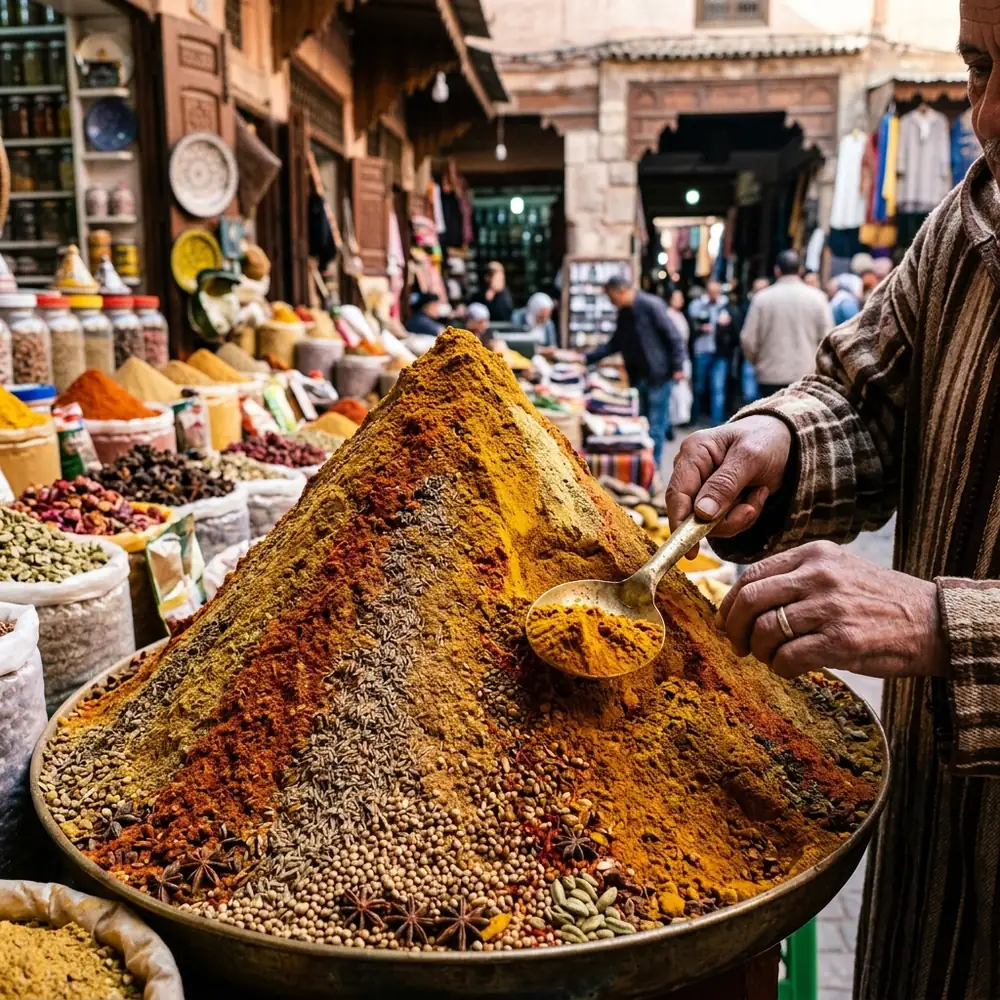
For a tagine serving four: one full teaspoon of ground ginger, one teaspoon of cinnamon, half a teaspoon of turmeric, half a teaspoon of black pepper, quarter teaspoon of white pepper, a generous pinch of saffron threads dissolved in a tablespoon of warm water. Salt generously throughout the cooking.
These quantities produce a well-spiced dish. If you have been making Moroccan tagines with a quarter teaspoon of each spice, double everything and then adjust from there — the spice level in authentic Moroccan home cooking is considerably higher than international recipes typically indicate, and the under-spiced version that many non-Moroccan cooks produce from conservative recipes is a weaker shadow of the intended dish.
The smen: use it if you have it, in place of or alongside olive oil. One tablespoon of smen and one tablespoon of olive oil is my standard for this tagine, which gives you both the smen’s deep savory character and the olive oil’s lighter fruitiness. If you have no smen, olive oil alone is acceptable.
The Invisible Invitation
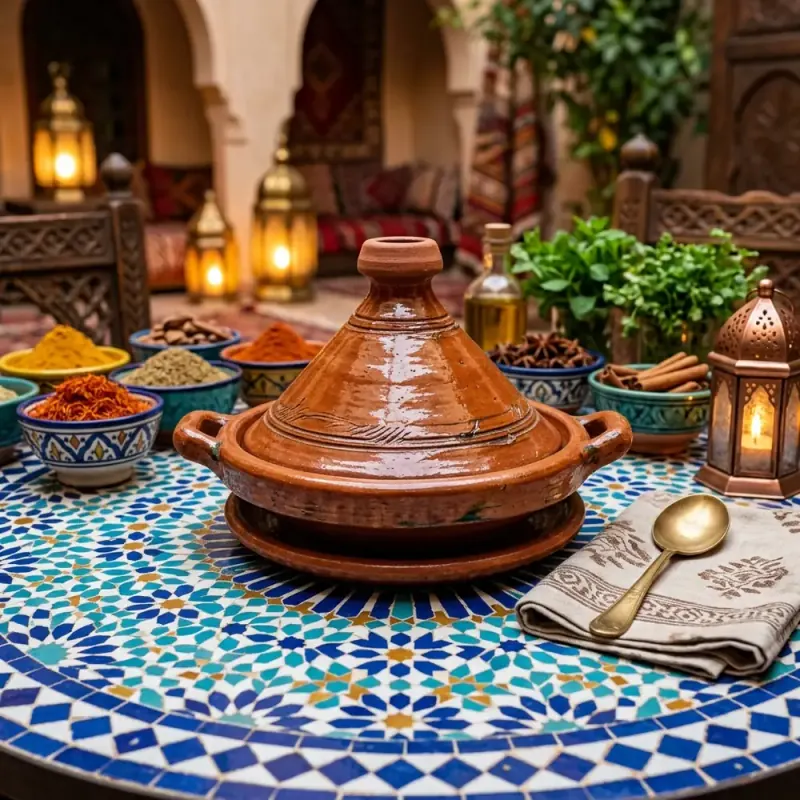
The tagine comes to the table in its clay vessel, lid still on, the smell of saffron and cinnamon present before the lid is removed. The lid comes off at the table, always — this is partly theater, partly function, because the condensation that has accumulated under the lid falls back into the sauce when you tilt the lid. The almonds are scattered across the surface, the prunes visible in the sauce around the lamb pieces. The sauce is dark and glossy and thick enough that it moves slowly when the vessel is tilted. Tear a piece of bread. Push it through the sauce to the edge of a piece of lamb. Take a prune with it. The first bite is the one that explains everything I just wrote. No description is as efficient as the first bite. Come eat.
SEO Meta Description: How to make Moroccan lamb tagine with prunes and almonds? The correct cut, spice quantities, honey balance, and the sweet-savory philosophy that defines the dish — not dessert with meat.
Experience the true heart of Moroccan heritage through its traditions. Join us in preserving these ancestral rituals.
What People Are Saying
No comments yet. Be the first — we'd love to hear from you.
Khadija Tahiri
A Moroccan cultural writer dedicated to documenting the authentic voice, history, and heritage of the Kingdom. Writing from within — to share what truly makes Morocco extraordinary.
Our Mission →