Seffa: The Sweet Couscous With Powdered Sugar That Arrives in the Middle of the Meal
Seffa: The Sweet Couscous That Is Not a Dessert and Why That Matters
Seffa presents the same interpretive challenge that bastilla does to non-Moroccan diners encountering it for the first time: a sweet preparation appearing at what seems to be an unexpected point in the meal structure, requiring the diner to adjust their understanding of what sweet means in the Moroccan culinary context.
Bastilla — the sweet-savory pigeon pie — appears as one of the earlier courses of a formal meal. Seffa — the sweet couscous with powdered sugar and cinnamon — appears between the main course and the end of the meal, which in Western meal structure would mark it as dessert. But Moroccan meals do not end with seffa; they typically end with fruit and perhaps pastries with tea. And seffa itself is not sweet in the way that dessert is sweet — it is a couscous dish dusted with powdered sugar, which produces a sweetness that is modulated by the grain’s natural nuttiness and the cinnamon’s warmth rather than the concentrated sweetness of a sugar-based dessert.
The position of seffa in the meal — between the meat or tagine course and the conclusion — reflects the traditional Moroccan formal meal’s different understanding of the sweet-savory relationship. Sweet and savory are not opposed categories in the Moroccan culinary tradition; they are elements that can alternate and coexist throughout a meal rather than being segregated into “main” and “dessert.” The seffa’s position is saying: the serious eating is done, the gathering is moving toward its conclusion, here is something lighter and sweet and beautiful before we end.
What Is Seffa Made From and How Is It Different From Couscous?
Seffa is made from the same couscous as the Friday dish — fine or medium-grain semolina couscous — but it is steamed with a different intention and finished differently. The steaming, as with Friday couscous, should be multiple passes to achieve the lightness that seffa requires. But seffa couscous is steamed without the savory broth that the Friday dish uses — the steam passes use plain water, and between passes the couscous is mixed with a small amount of butter and sugar and orange blossom water rather than the oil-and-salt of savory couscous preparation.
The result is a couscous with a slightly sweet interior — the sugar and butter worked through the grains between steams — and a light, airy texture that is distinctly different from the dense, savory couscous of the main course. The individual grains should be completely separate and should not clump. Properly steamed seffa, poured onto a platter and shaped into a mound, should hold the mound shape without the grains sticking to each other.
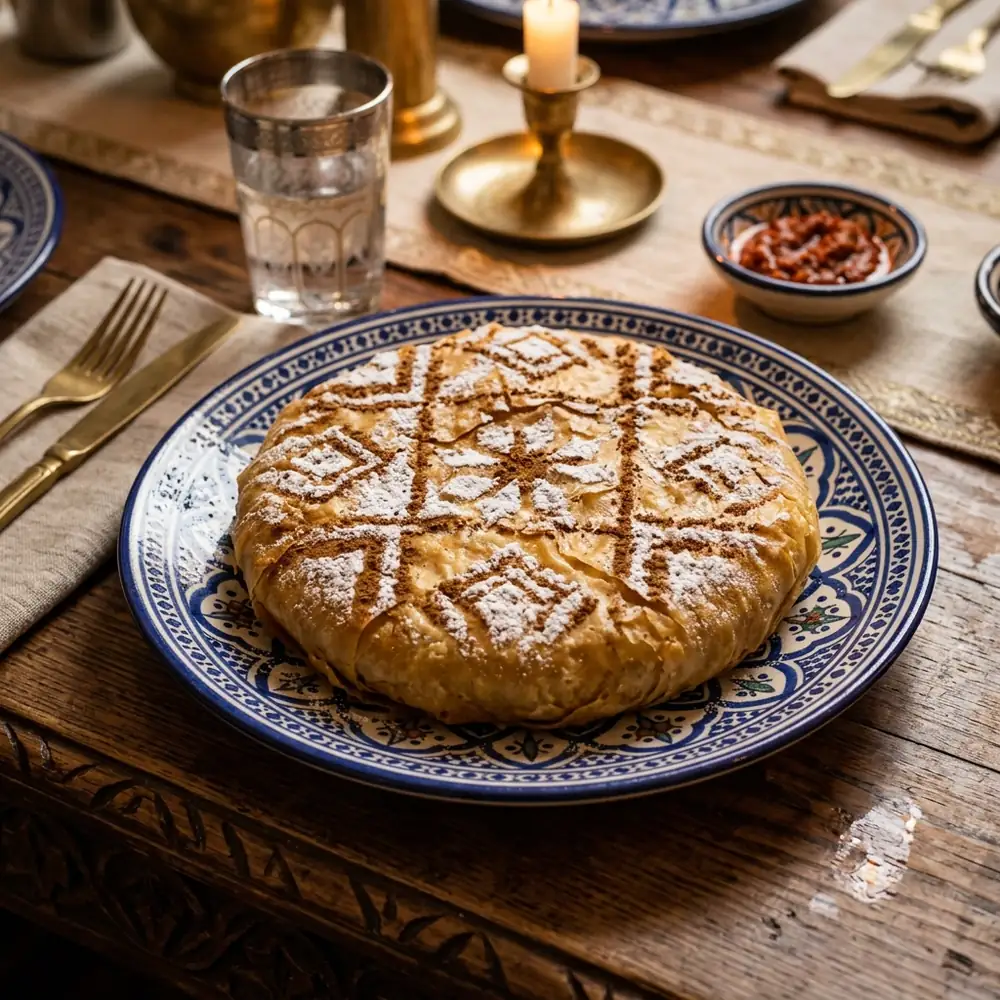
The mound of seffa is then dusted — generously, visibly — with powdered sugar through a fine sieve, so the sugar falls in an even layer across the entire surface. Cinnamon follows, either in a geometric pattern (the traditional presentation) or in a uniform layer. The surface should be white from the sugar with cinnamon visible on top — the combination of white and brown-spice is the visual signature of seffa.
What Goes on Top of the Seffa and Where Does Each Element Come From?
Fried almonds — blanched, fried in oil or butter until golden, drained and cooled — are scattered across the powdered sugar surface. The almonds should be whole or roughly halved; finely ground almonds cannot provide the textural contrast that the fried whole almond adds.
Raisins — plumped in warm water or orange blossom water, drained — are distributed among the almonds. The sweetness of the raisin against the cinnamon-sugar surface is the primary sweet note at the point of eating; the couscous itself is mildly sweet, and the concentrated sweetness of the raisin provides the punctuation.
Some versions include shredded chicken — cooked separately in a simple broth, shredded by hand, and arranged in the center of the couscous mound or worked through the upper layers. This is the seffa medfouna (“buried seffa”) tradition, where the sweet couscous and the savory chicken are combined in a single preparation that occupies the same sweet-savory ambiguity as bastilla. The chicken is visible in the center and invisible in the mound, and each portion contains some of each.
How Is Seffa Eaten at the Table?
At formal Moroccan meals, seffa is served communally from the large platter — each person eating from the area of the platter directly in front of them, as with the Friday couscous. The combination of a small amount of sweet couscous with an almond and a raisin in one handful is the correct eating unit.
Unlike the Friday couscous, which is eaten with bread, seffa is typically eaten without bread — it is a sweet preparation and bread does not complement it well. It is eaten as it is, with the fingers in traditional practice.
The portion size matters: seffa is meant to be eaten in a quantity that satisfies without filling, which is a smaller quantity than most diners initially take. It is the preparation before the meal concludes, not the meal’s culmination, and it should leave room for the fruit and tea that follow.
The Invisible Invitation
The savory courses have been cleared and the seffa arrives on its large platter, the powdered sugar still slightly clouded from the sieving, the cinnamon pattern visible on the white surface, the almonds gold and the raisins dark against it. The smell is different from everything that came before — sweet, warm, the orange blossom water present underneath the cinnamon. Take a small amount — a handful-size portion. The couscous is lighter than you expected, each grain distinct. The almond is crisp against the softness of everything else. The raisin is sweet enough to mark the transition from savory to sweet and not so sweet as to overwhelm. This is the signal that the meal is moving toward its end. It is a gentle signal, made of good grain and butter and sugar and care. Finish your portion. The tea will come shortly.
SEO Meta Description: What is Moroccan seffa sweet couscous? The multiple-steam technique, sugar-cinnamon surface, fried almonds and raisins, seffa medfouna variation, and why it appears in the middle rather than the end of the meal.
Experience the true heart of Moroccan heritage through its traditions. Join us in preserving these ancestral rituals.
What People Are Saying
No comments yet. Be the first — we'd love to hear from you.
Khadija Tahiri
A Moroccan cultural writer dedicated to documenting the authentic voice, history, and heritage of the Kingdom. Writing from within — to share what truly makes Morocco extraordinary.
Our Mission →