Ras El Hanout: The Myth and Magic of the Shopkeeper's Spice Blend
Ras El Hanout: The Myth and Magic of the Shopkeeper’s Spice Blend
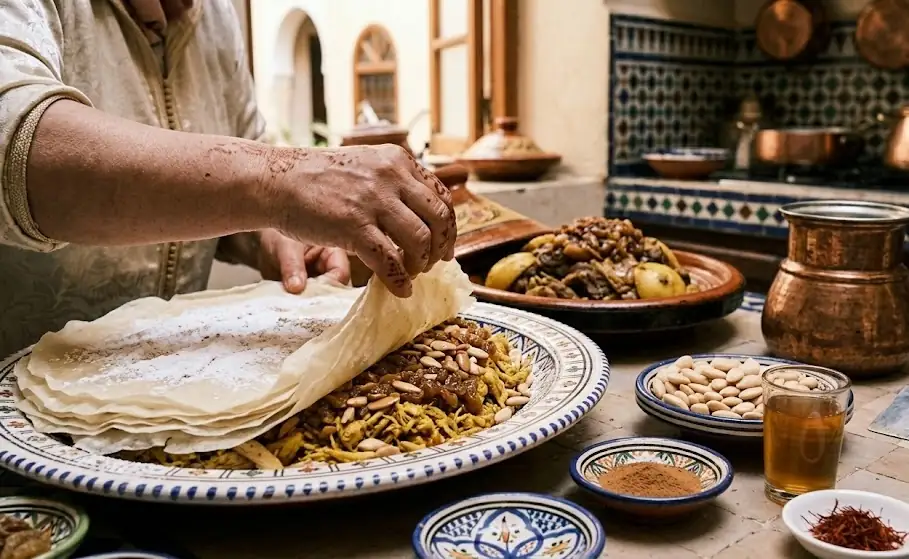
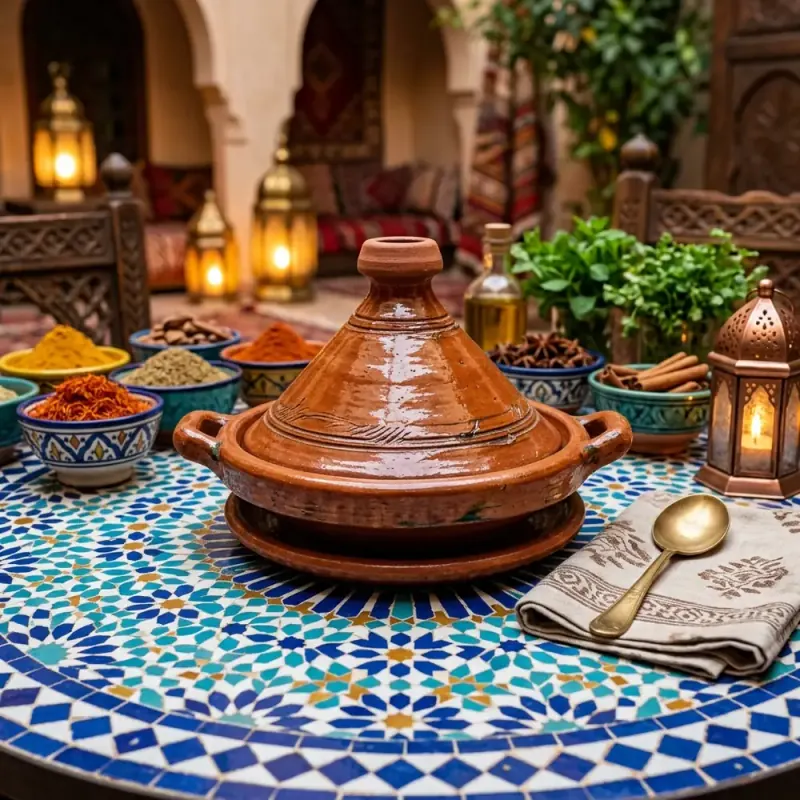
If you ask ten different Moroccan spice merchants for their Ras El Hanout recipe, you will get ten entirely different answers. Translating to ‘the head of the shop,’ this legendary, warming spice blend represents the absolute pinnacle of a merchant’s inventory. It is the complex, mysterious heartbeat of our most celebrated dishes, from hearty Mrouzia to the rich broths of winter.
What spices are traditionally found in Ras El Hanout?
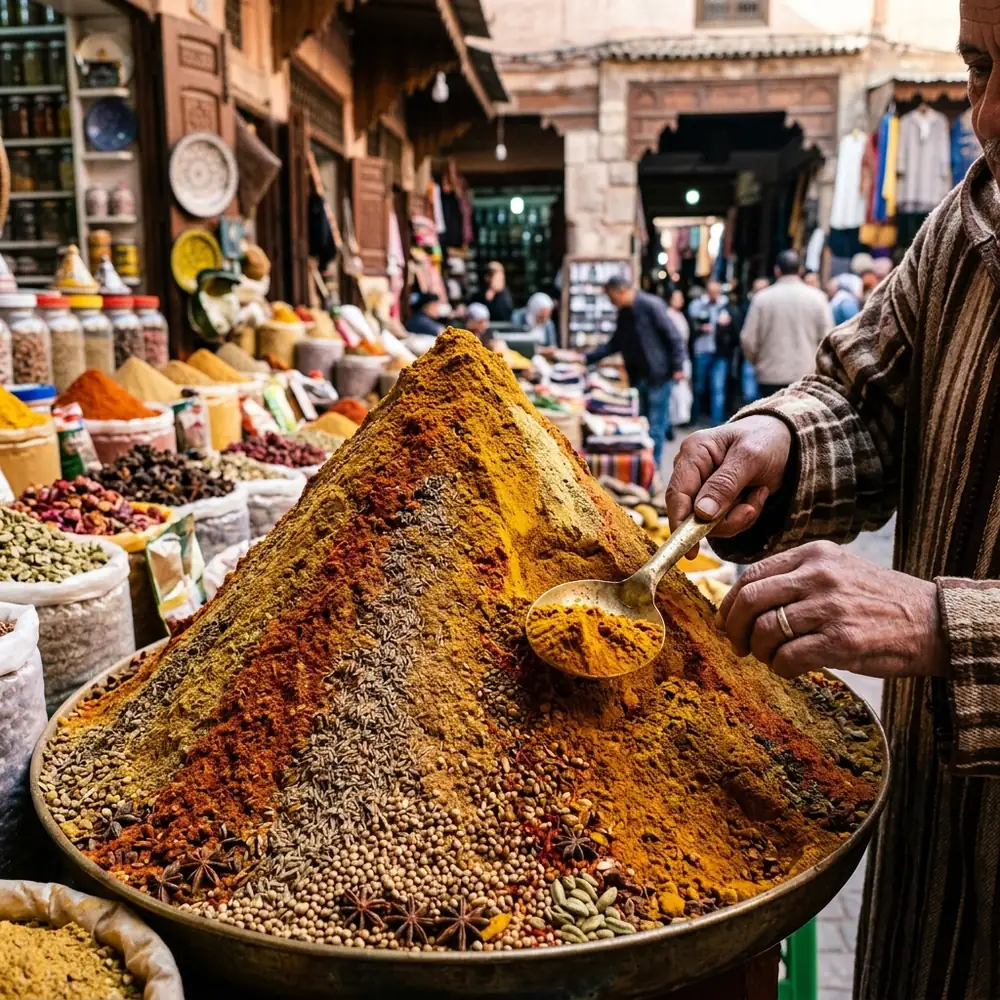
While there is no single, fixed recipe, a masterful Ras El Hanout is an orchestration of sweet, fiery, and deeply earthy notes.
- The Warmth: Cinnamon, cloves, nutmeg, and mace provide a foundational, sweet heat.
- The Earth: Toasted cumin, coriander seed, and turmeric offer deep, savory grounding.
- The Fire: Black pepper, white pepper, and sometimes a hint of fiery grains of paradise or chili.
- The Exotic: Rose petals, lavender, cardamom, and even dried Spanish fly (in ancient, outlawed recipes) add unforgettable floral high notes.
The alchemy of the ancient spice merchants
In the ancient souks of Marrakech and Fes, creating Ras El Hanout was the ultimate test of traditional Moroccan herbalism and alchemy. A master merchant (attar) would combine anywhere from 20 to over 100 different whole spices, roots, and dried flowers. The exact proportions were fierce family secrets, passed down from father to son. The goal was never to let a single spice dominate, but to create a harmonious chorus that elevated the meat without masking it.
How to use Ras El Hanout at home
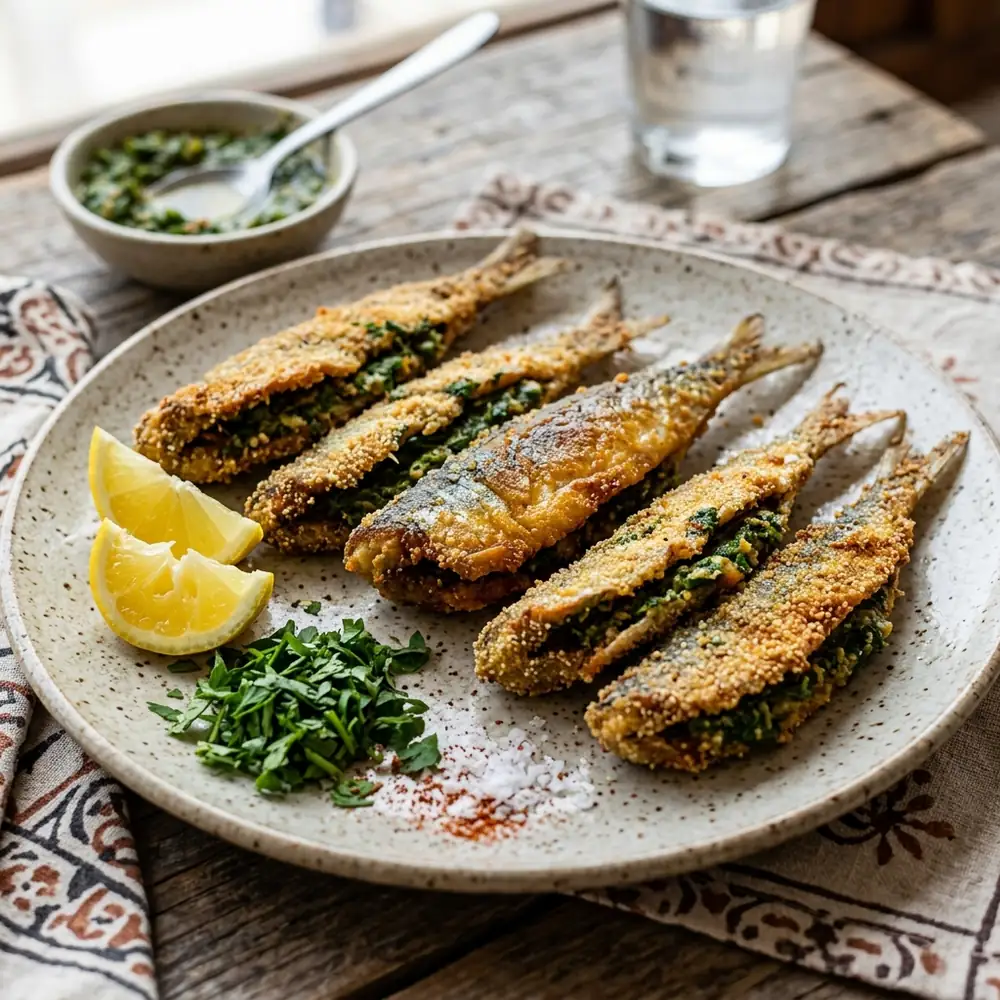
- Never use it in delicate fish dishes or fresh salads; its aggressive complexity is designed specifically for heavy, slow-cooked red meats and poultry.
- Buy it whole if possible and grind it fresh; the volatile oils of the exotic flowers and barks dissipate quickly when stored as a powder.
The Invisible Invitation
The air in the spice market is thick with the perfume of rose petals and toasted cumin. Follow the scent through the winding alleys of the medina, where our master merchants are waiting to share their greatest secrets with you.
Experience the true heart of Moroccan heritage through its traditions. Join us in preserving these ancestral rituals.
What People Are Saying
No comments yet. Be the first — we'd love to hear from you.
Farisse ahmed
A Moroccan cultural writer dedicated to documenting the authentic voice, history, and heritage of the Kingdom. Writing from within — to share what truly makes Morocco extraordinary.
Our Mission →