Ras el Hanout: The Myth and Reality of the "Head of the Shop"
Ras el Hanout: The Myth and Reality of the “Head of the Shop”
If there is one spice blend that is synonymous with Moroccan cuisine worldwide, it is Ras el Hanout. It is heavily romanticized, often described as a mystical powder containing dozens of secret ingredients.
While the reality is less magical, it is far more interesting.
The Head of the Shop
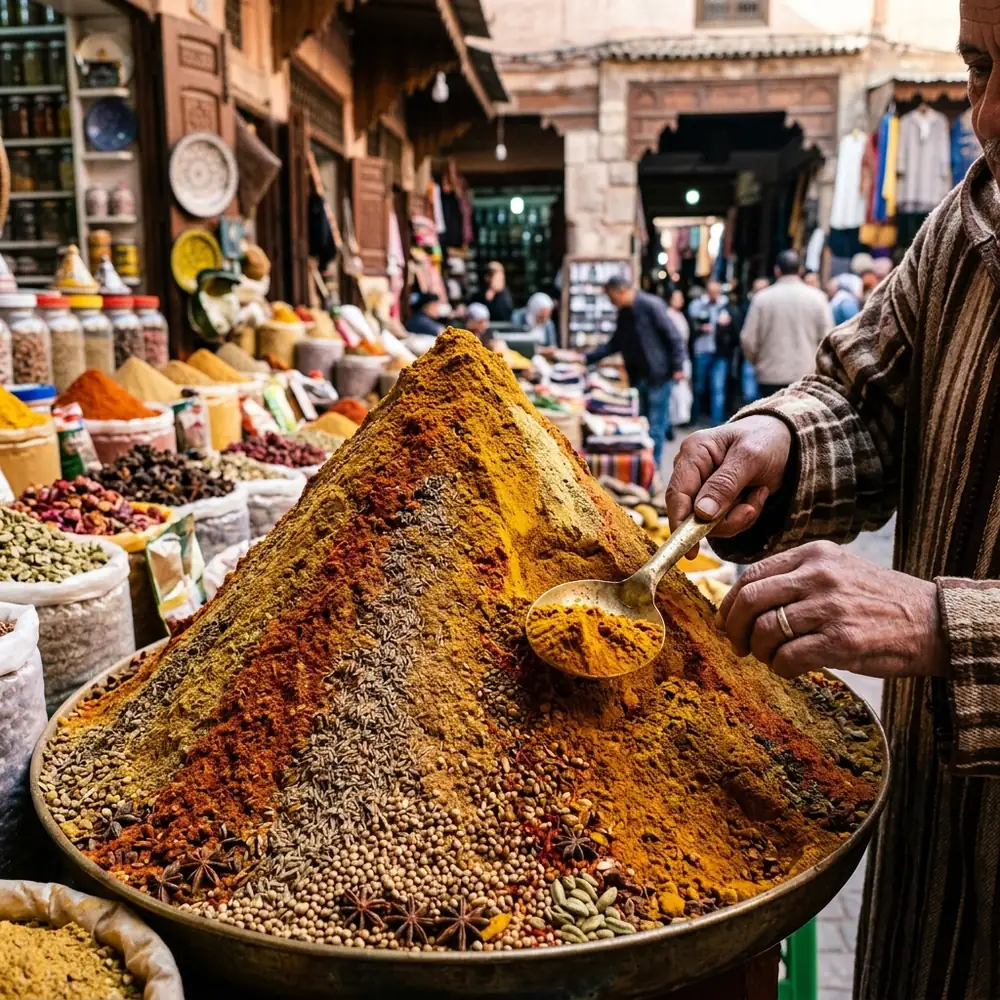
Ras el Hanout literally translates to “Head of the Shop.” It signifies that the blend is the absolute finest, top-tier offering the spice merchant (Attar) can produce.
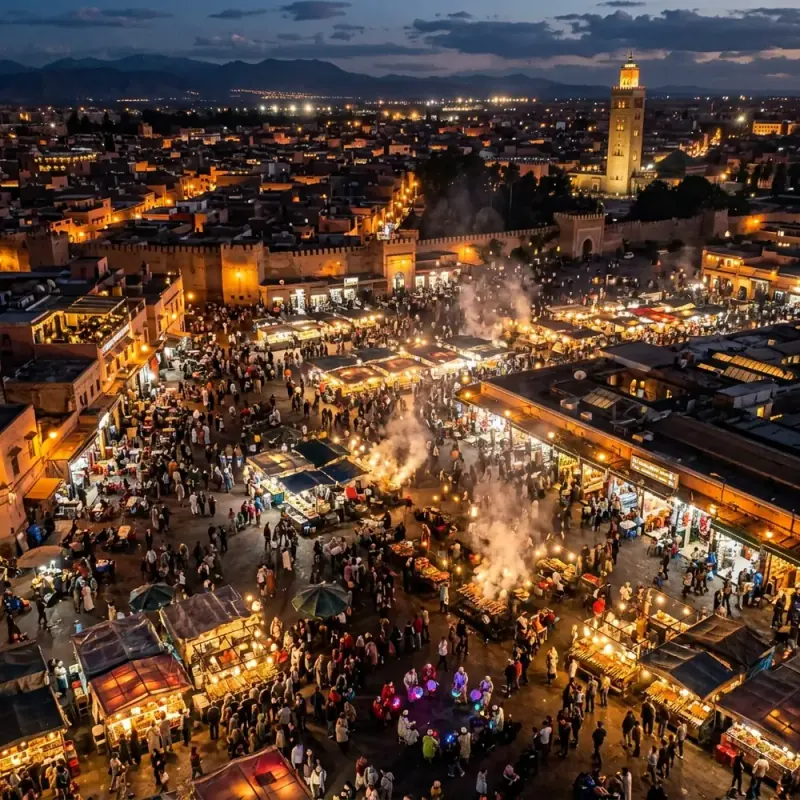
Because of this, there is no single, official recipe for Ras el Hanout. If you buy a blend in the medina of Marrakech, it will taste vastly different from a blend bought in Fes or Tangier. The recipe depends entirely on the merchant’s personal taste, the regional palate, and the wealth of the customer.
The Anatomy of the Blend
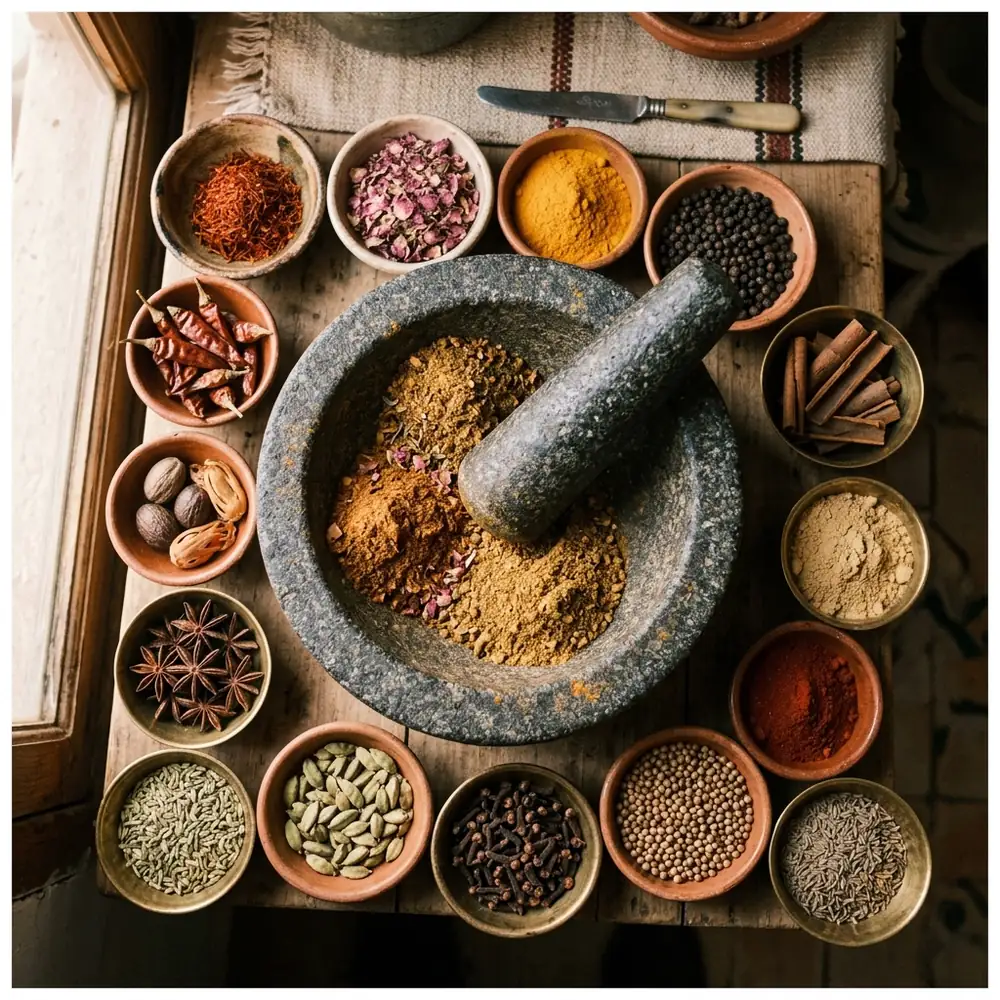
A standard supermarket version might contain 10 to 12 spices. A true, artisanal Ras el Hanout bought from a master apothecary will contain anywhere from 30 to 50 distinct ingredients.
The foundation is almost always built on warming spices: cinnamon, ginger, cardamom, and clove. But the complexity comes from the exotics: grains of paradise, mace, dried iris root, galangal, cubeb pepper, and long pepper. In the old days, some merchants even included controversial (and now banned) ingredients like Spanish fly or certain psychoactive berries to give the blend a legendary “kick.”
When to Use It (And When Not To)
Foreigners often make the mistake of using Ras el Hanout in everything, treating it like a generic curry powder. In the Moroccan kitchen, this is a cardinal sin.
Ras el Hanout is a heavy, dominant, and deeply warming spice. It is used exclusively in robust, festive dishes like Mrouzia (the sweet lamb and raisin tajine) or heavily spiced winter stews. You would never, ever put Ras el Hanout in a delicate fish tajine, a light chicken and lemon dish, or a fresh vegetable stew.
It is the king of the spice cabinet, and like any king, it only makes an appearance on special occasions.
Experience the true heart of Moroccan heritage through its traditions. Join us in preserving these ancestral rituals.
What People Are Saying
No comments yet. Be the first — we'd love to hear from you.
Youssef Amazigh
A Moroccan cultural writer dedicated to documenting the authentic voice, history, and heritage of the Kingdom. Writing from within — to share what truly makes Morocco extraordinary.
Our Mission →