Taliouine Saffron: The Most Aromatic Saffron in the World
Taliouine: The High-Altitude Heart of the Red Gold
My aunt pressed a tiny glass vial into my palm the morning I left for university. “Three threads,” she said, “for your first big exam soup.” I didn’t understand until I was standing over a pot of simmering broth and the steam hit me — earthy, honeyed, impossibly deep. That was my first true encounter with Taliouine saffron. High in the Anti-Atlas mountains, nestled between Saharan plains and the snow-capped Sirwa massif, this small town guards one of Morocco’s most precious secrets. While saffron is grown in many parts of the world, experts consistently confirm that Taliouine threads rank among the most aromatic and chemically potent on the planet.
The Harvest of the Dawn
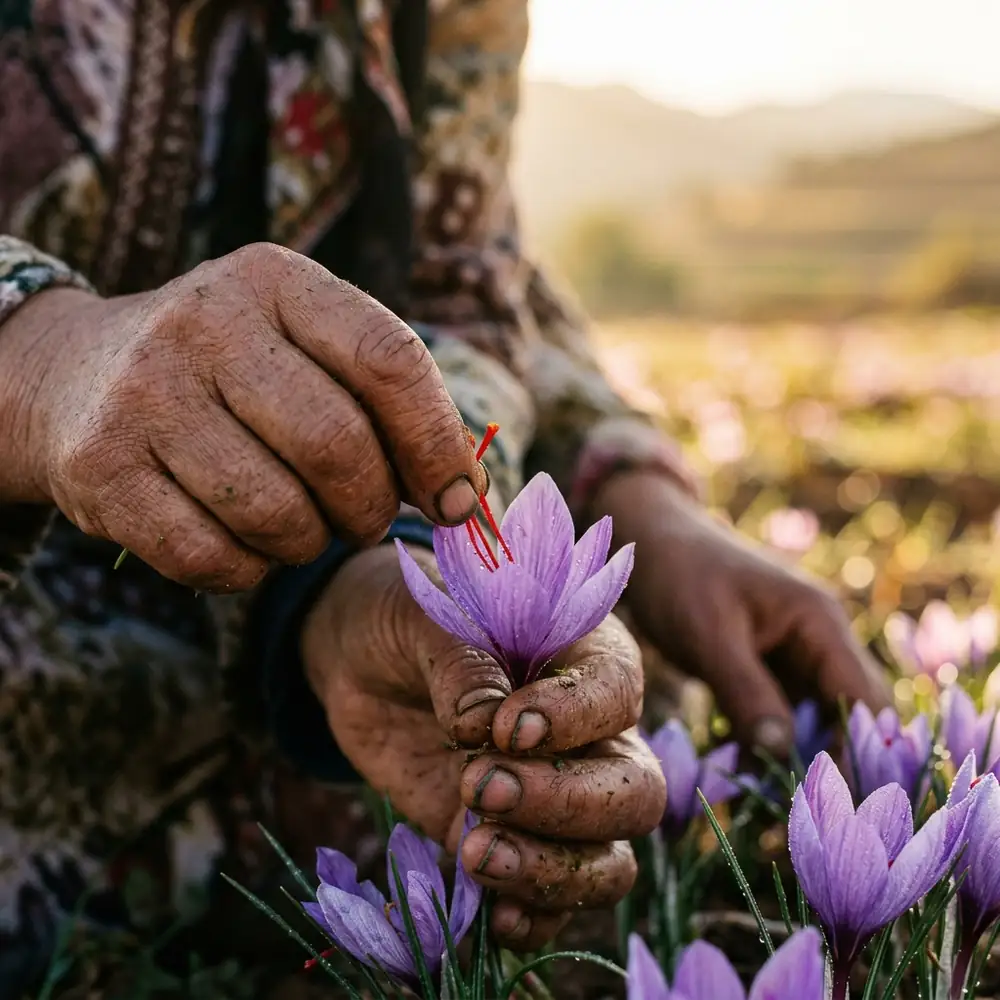
The production of saffron is an act of total devotion. The “Red Gold” comes from the delicate Crocus Sativus flower, which blooms for only a few weeks each October and November.
- The Waking Hour: The flowers must be picked by hand during the cold hours before dawn. If the sun touches the petals, the delicate stigmas begin to lose their potency.
- The Separation: After picking, the workers (mostly local women) manually extract the three red stigmas from each flower. It takes roughly 150,000 flowers to produce just one kilogram of dried saffron.
- The Drying: The threads are carefully dried to lock in their color and aroma, a process that requires a master’s touch.
Why Taliouine Saffron is Unique
The quality of Taliouine saffron is a product of its terroir.
- The Soil: Volcanic, mineral-rich soil that gives the saffron its unique, earthy depth.
- The Altitude: At 1,200 meters above sea level, the cold nights and hot days stress the plant just enough to produce a high concentration of safranal (aroma) and crocin (color).
- Aromatic Power: Laboratory tests show that Taliouine saffron often has higher aromatic levels than its more famous Iranian or Spanish counterparts.
Using Taliouine Saffron in Your Kitchen
- Hydration is Key: Never throw saffron directly into a pan. Instead, crush the threads and soak them in a small amount of warm water or broth for 15 minutes before adding them to your dish.
- The Royal Flavor: It is the essential ingredient for true Moroccan Lamb with Prunes or a festive Seffa (sweet couscous).
- Saffron Tea: A few threads in a glass of mint tea or warm milk is a traditional Berber remedy for relaxation and health.
Tips for Buying Real Saffron
- The Price: Saffron is the most expensive spice in the world. If you find a “deal” on saffron, it is almost certainly fake (often dyed corn silk or safflower).
- The Water Test: Real saffron will slowly turn water a golden yellow while the thread itself remains red. Fake saffron will turn the water red immediately because of the dyes.
- Look for the PDO Label: Always look for the Protected Designation of Origin (AOP) label, which guarantees the saffron truly comes from Taliouine.
To Keep the Conversation Going A Labor of Love
Taliouine saffron is the essence of the Moroccan mountains — precious, hard-won, and impossibly beautiful. Every thread represents the cold pre-dawn fingers of a mountain woman who knows exactly what she’s holding. By choosing this spice, you are supporting ancient cooperatives and bringing the most extraordinary aroma in the world to your table. If you’ve cooked with real Taliouine saffron, share your recipe below — we’re always looking for new ways to honor the Red Gold.
Frequently Asked Questions (FAQ)
Q1: Why is saffron called “Red Gold”? A: Beyond its price (which often rivals gold by weight), it represents the primary source of wealth and economic survival for thousands of families in the Taliouine region.
Q2: How long does saffron last? A: If kept in an airtight glass jar in a dark place, saffron will maintain its potency for about 2-3 years. After that, it won’t be “bad,” but it will lose its aroma.
Q3: Can I grow saffron crocuses in my garden? A: Yes, if you have a Mediterranean-like climate with well-drained soil and a distinct cold period in the winter. However, you’ll need a lot of space to get even enough for one dinner!
Experience the true heart of Moroccan heritage through its traditions. Join us in preserving these ancestral rituals.
What People Are Saying
No comments yet. Be the first — we'd love to hear from you.
H. Elmrabet
A Moroccan cultural writer dedicated to documenting the authentic voice, history, and heritage of the Kingdom. Writing from within — to share what truly makes Morocco extraordinary.
Our Mission →