The Ascent of Jebel Toubkal: Climbing the Roof of North Africa
Jebel Toubkal: The Roof of the Maghreb
If you stand on the roof of a high riad in Marrakech on a clear winter day and look south, the horizon is dominated by a jagged, snow-capped wall of rock. This is the High Atlas range. Somewhere in that white serrated line is Jebel Toubkal.
At 4,167 meters (13,671 feet), Toubkal is the highest peak in Morocco, the highest in the Atlas Mountains, and the highest in North Africa. It is a massive, unforgiving block of volcanic rock. Yet, despite its intimidating altitude, Toubkal is famously accessible. During the summer months, the ascent requires no ropes, no crampons, and no technical mountaineering skills. It is a “trekking peak” — a long, steep, exhausting hike.
But accessibility is not the same as ease. Toubkal commands respect. The altitude is high enough to induce acute mountain sickness (AMS), and the weather can change from blistering heat to freezing blizzards in a matter of hours.
The Trailhead: Imlil and the Amazigh Guides
The journey to the summit invariably begins in Imlil, a bustling village situated at 1,740 meters, about a 90-minute drive from Marrakech. Imlil is the Chamonix of the Atlas — a staging ground filled with guesthouses, gear rental shops, and the persistent smell of woodsmoke and mule dung.
The ascent is managed almost entirely by the local Amazigh population. They are the guides, the cooks, and the muleteers. The mules carry the heavy gear (food, sleeping bags, extra water) up the steep, rocky paths, while the trekkers carry only daypacks. Hiring a local guide is not just legally required; it is an economic necessity for the valley and a safety guarantee for the climber. The guides know the scree slopes, the sudden weather shifts, and the pacing required to avoid altitude sickness.
The Two-Day Itinerary
The classic ascent is split over two days to allow for acclimatization.
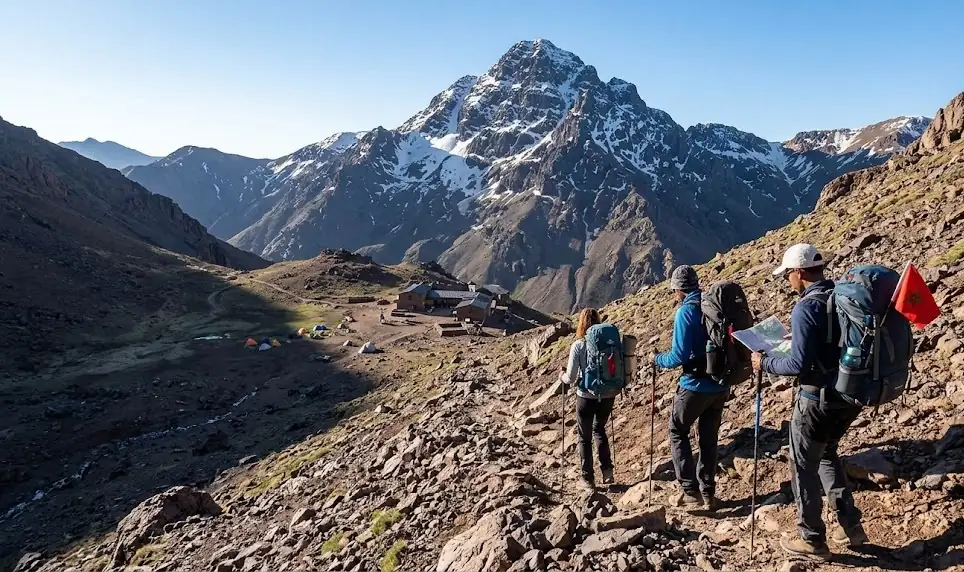
Day 1: The Hike to the Refuge The first day is a steady, punishing upward slog from Imlil (1,740m) to the base camp refuges (3,207m). The trail winds through walnut groves, past the holy shrine of Sidi Chamharouch (a massive white rock where pilgrims come to seek healing from the “King of the Jinns”), and up into the barren, rocky alpine zone. The hike takes about five to six hours.
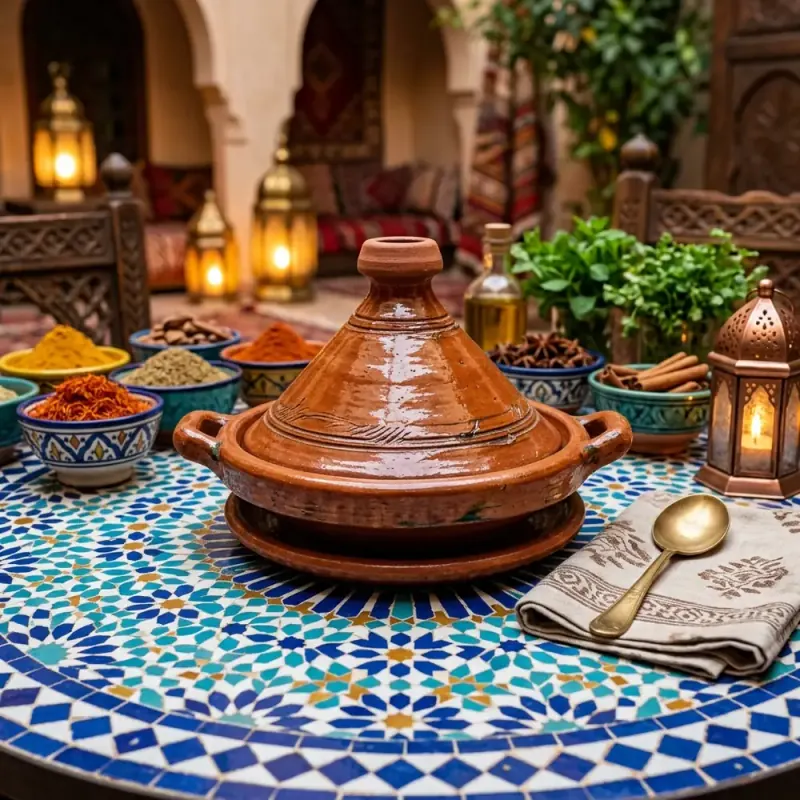
The refuges (the Neltner Refuge and the Toubkal Refuge) are large stone buildings sitting in a stark, U-shaped valley. Here, trekkers eat a massive tagine prepared by their guides, secure a bunk bed in a crowded dormitory, and attempt to sleep through the cold and the thin air.
Day 2: The Summit Push The summit day begins violently early. Guides wake their groups at 4:00 AM. Breakfast is choked down in the dark. Headlamps are switched on, and the final ascent begins.
The trail from the refuge to the summit is a steep, zigzagging path over loose scree (broken rock). In the dark, all you can see is the circle of light from your headlamp and the boots of the person in front of you. The air is distinctly thin. Breathing becomes labored, and the pace slows to a crawl. The mantra of the guides is constant: “Chwiya, chwiya” (Slowly, slowly).
The Iron Triangle
As dawn breaks, the temperature plummets, but the sky turns a brilliant, clear blue. After three to four hours of grueling upward movement, the slope begins to flatten out. Suddenly, you see it against the sky: the metallic, pyramidal tripod that marks the summit.
At 4,167 meters, the view is incomprehensibly vast. To the north, the plains of Marrakech spread out into the haze. To the south, the anti-Atlas mountains roll away toward the edge of the Sahara desert. You are standing on the highest piece of rock in the Arab world, with the cold wind biting your face and the immense silence of the High Atlas below you.
The Invisible Invitation
You are 300 meters below the summit. It is 6:30 AM. Your legs are burning with lactic acid, and a dull headache throbs behind your eyes from the altitude. The loose rocks slip backward under your boots with every step. You stop, lean on your trekking poles, and consider turning around. Then, your Amazigh guide, who has made this climb perhaps two hundred times, walks up beside you. He is carrying a heavy pack, breathing easily through his nose, and smiling. “Yallah,” he says quietly. “Let’s go. We will drink tea at the top.” You push off the rocks and keep moving. When you finally touch the cold iron of the summit pyramid and look out over the Sahara, you understand that the mountain did not let you conquer it; it merely permitted you to visit.
SEO Meta Description: A complete guide to climbing Jebel Toubkal in Morocco. Learn about the two-day trek from Imlil, the role of Amazigh guides, altitude sickness, and reaching the highest peak in North Africa.
Experience the true heart of Moroccan heritage through its traditions. Join us in preserving these ancestral rituals.
What People Are Saying
No comments yet. Be the first — we'd love to hear from you.
Youssef Amazigh
A Moroccan cultural writer dedicated to documenting the authentic voice, history, and heritage of the Kingdom. Writing from within — to share what truly makes Morocco extraordinary.
Our Mission →