Zaalouk: The Moroccan Smoked Eggplant Salad Nobody Serves from a Flat Plate
Zaalouk: What This Moroccan Eggplant Salad Tastes Like When It Is Made Correctly
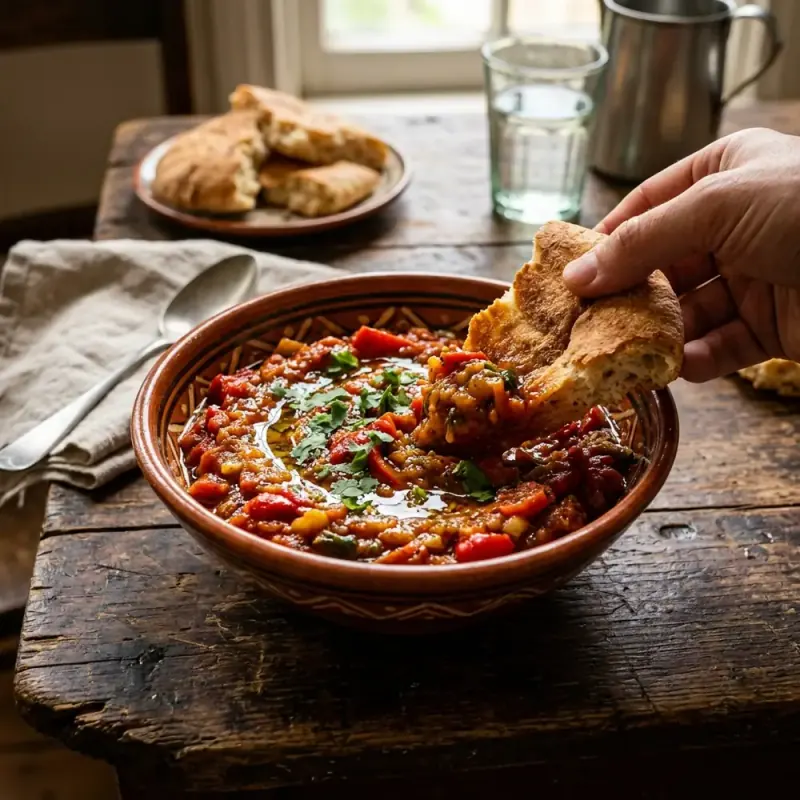
Before I tell you anything about how to make zaalouk, I want to address something that has genuinely bothered me every time I have seen it presented in a Western food magazine or travel article: zaalouk is not a dip. It is not a spread. It is not served on a flat plate with decorative oil swirls and a micro-herb garnish. It is a warm, communal salad served in a deep ceramic bowl in the center of the table, and you tear bread and drag it through the bowl, and the bowl goes back and forth between everyone at the table until it is clean.
If you have only eaten zaalouk in a restaurant that has styled it for Instagram, you have not eaten zaalouk in any way that conveys what it actually is. I say this not to be difficult, but because the communal, informal, slightly chaotic experience of eating it correctly is inseparable from understanding why it is so beloved.
Now. How to make it.
What Makes Zaalouk Different From Other Eggplant Preparations?
The answer is fire. Specifically, the direct-flame roasting of the eggplant before anything else happens.
In the Moroccan ancestral method, the eggplant goes directly onto a gas burner flame — or historically onto charcoal coals — and chars completely on the outside. Completely. The skin blackens and blisters and collapses, the interior steams in its own moisture, and when it is done — which takes about twenty minutes of turning over an open flame and considerably more patient standing near a hot stove than most people expect — what you have is something that looks slightly alarming from the outside and smells extraordinary from any direction.
The interior flesh, scooped out and discarded of its charred skin, has a deep smokiness that no amount of oven-roasting replicates. You can roast eggplant in a 200-degree oven until it is completely tender and it will be fine. It will not be the same. The char flavor from direct flame contact is a distinct character — slightly bitter, smoky, with a sweetness that the high heat caramelizes out of the eggplant flesh — and it is the backbone of what makes zaalouk zaalouk rather than just another stewed vegetable preparation.
The tomatoes are treated with similar directness. Fresh, ripe tomatoes — peeled (I score the bottom with an X, blanch briefly, and the skins slip off) and grated on a box grater directly into the pan to produce a quick, fresh tomato purée with more body than tinned and more immediacy than a long-cooked sauce. The grating extracts juice and flesh while leaving the fibrous skin behind, and the result cooks down much faster than chopped tomatoes, reaching a concentrated, jammy consistency in fifteen minutes rather than forty.
What Are the Spices That Go Into Zaalouk?
Here is where regional and family variation is significant, and where I will tell you what I use and acknowledge that there are other correct answers.
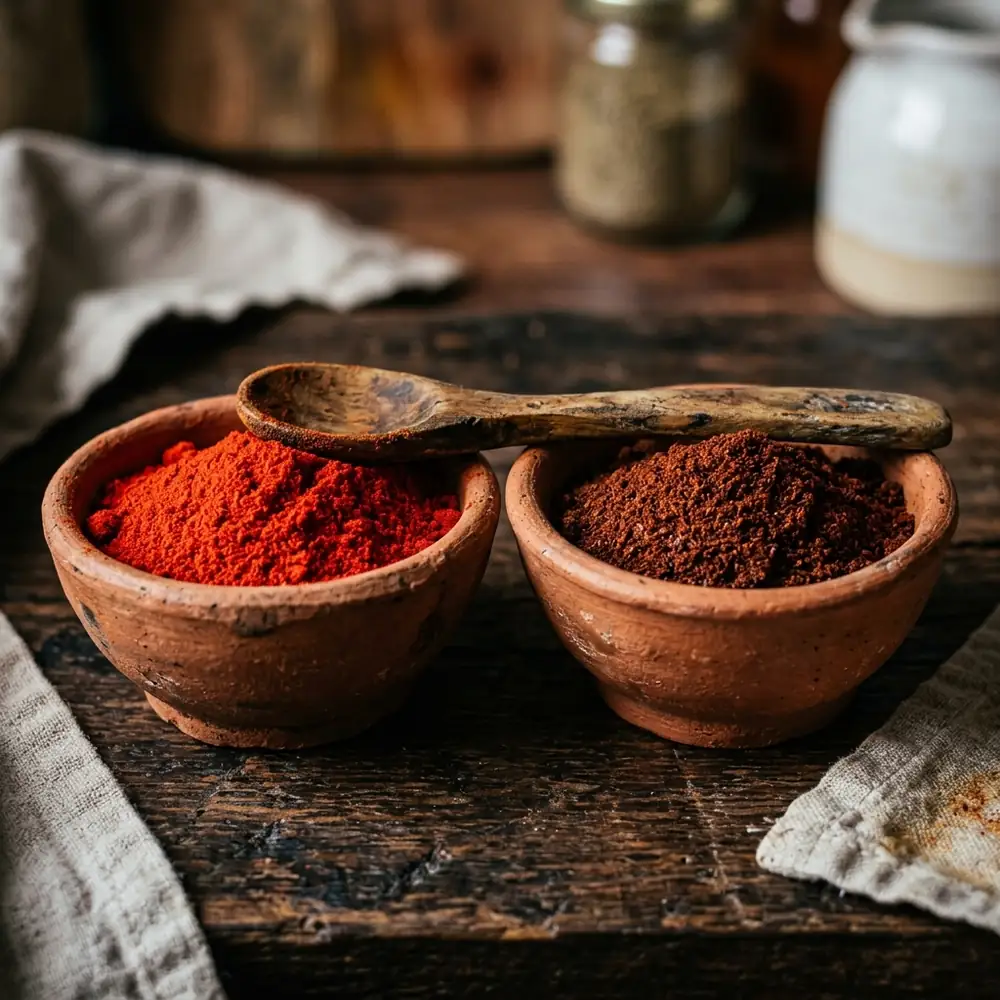
Cumin is non-negotiable. A full teaspoon of ground cumin, or more — zaalouk is not shy about cumin, and recipes that use a quarter-teaspoon of it produce something timid and thin in flavor. Cumin is the warm, earthy undertone that anchors the brightness of the tomato and the smoke of the eggplant.
Paprika — sweet, not smoked (the zaalouk has its own smoke and doesn’t need more from a spice) — adds color and a mild sweetness. One teaspoon.
Garlic: three to four cloves, minced and added to the pan with the tomatoes, cooked until fragrant and beginning to color before the eggplant goes in. Raw garlic added at the end of cooking, which some recipes suggest, is a different dish — sharper, more aggressive, less integrated.
Coriander and flat-leaf parsley, both fresh, both chopped finely and added at the very end off the heat. Their freshness against the warm, cooked body of the zaalouk is the contrast the dish needs. Do not wilt them by adding them while the pan is still on the flame.
Preserved lemon — rind only, rinsed, finely chopped — and a generous pour of good olive oil go in at the same moment as the herbs. The preserved lemon brightness cuts through the richness of the olive oil and ties the whole thing together. Without it, zaalouk is good. With it, zaalouk is right.
How Is Zaalouk Served in a Traditional Moroccan Meal?
Zaalouk is a salada — a Moroccan cooked salad — and like all the cooked salads of our table tradition, it arrives early in the meal, served simultaneously with several other small dishes before the main tagine or couscous. This is the Moroccan mezze equivalent, though we don’t call it that, and the combination of cooked salads laid out at the center of the table is one of the most genuinely pleasurable ways to begin a meal that I know.
Alongside zaalouk you might find taktouka (roasted pepper and tomato salad, similar in concept but completely different in flavor), a plate of preserved olives and preserved lemons, a bowl of harira if the season is right, fresh khobz bread still warm from the communal oven. The table fills with small bowls and plates, and the bread is the utensil for all of them.
The zaalouk bowl goes in the center because it is the deepest and the most communal — everyone’s bread visits it repeatedly throughout the meal. By the time the tagine arrives, the zaalouk bowl is usually clean. This is correct. This is the point.
The Invisible Invitation
The bowl arrives still warm — a wide, hand-painted ceramic from a Safi potter, deep enough that the zaalouk pools rather than spreads, glossy with olive oil on the surface, the fresh herbs still vivid green against the dark roasted eggplant beneath. The bread basket is already on the table. Tear a piece — not cut, tear — and drag it through the bowl. The first bite will be warm and smoky and bright with preserved lemon all at once. Pull the bowl toward you if you need to. Nobody will object. This is the whole idea.
SEO Meta Description: What is Moroccan zaalouk? A Fassi culinary guide to the fire-roasted eggplant salad — correct technique, essential spices, and why it must be served in a communal bowl, never flat-plated.
Experience the true heart of Moroccan heritage through its traditions. Join us in preserving these ancestral rituals.
What People Are Saying
No comments yet. Be the first — we'd love to hear from you.
Khadija Tahiri
A Moroccan cultural writer dedicated to documenting the authentic voice, history, and heritage of the Kingdom. Writing from within — to share what truly makes Morocco extraordinary.
Our Mission →